Aug 07, 2026
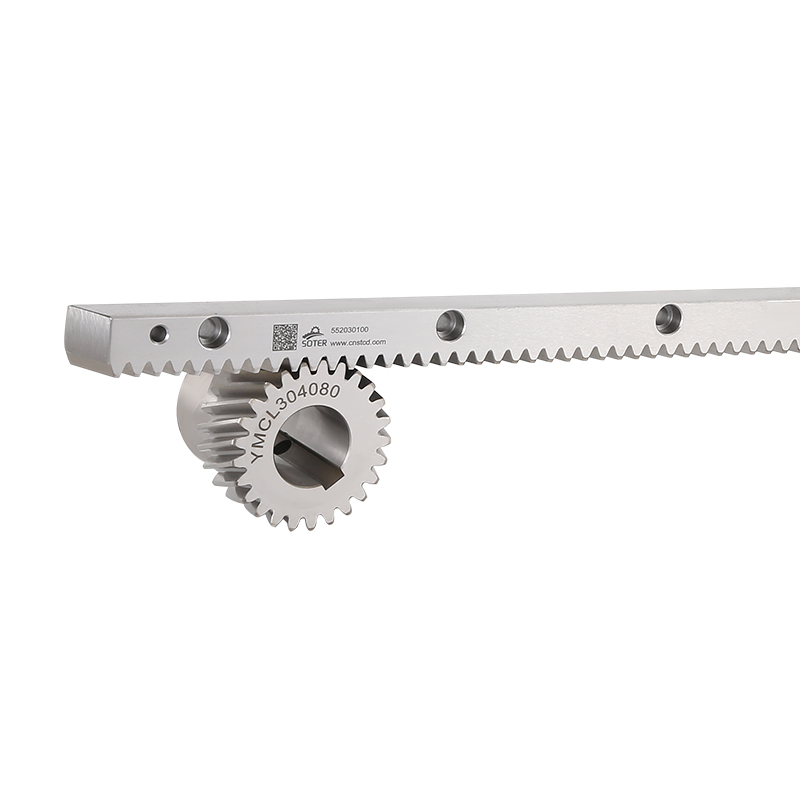
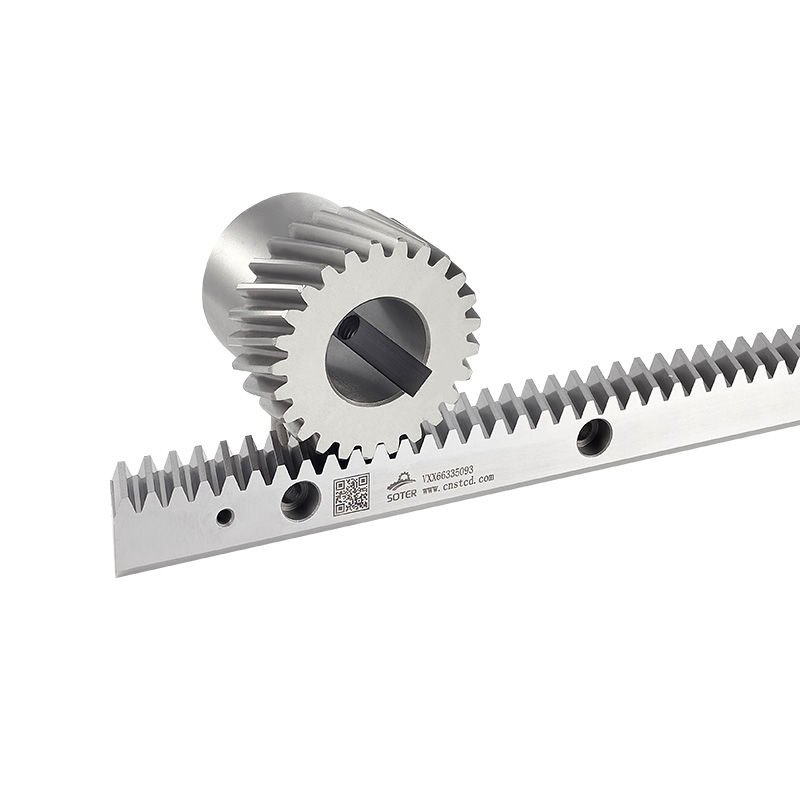
Precision rack gears sit at the heart of motion control across today's factory floors. They turn rotary power into smooth, exact linear travel, letting production machinery run consistent, repeatable cycles. You'll find these key parts fitted onto automated tools and large heavy-duty machines alike, supporting steady performance wherever controlled straight-line movement is required.
Top-tier rack gears do not gain reliable performance by chance. Their quality comes from a strict, sequential production routine: picking raw materials, cutting gear teeth to tight tolerances, surface hardening and full quality audits. Each step shapes how accurately and how long a rack gear will hold up out in the field.
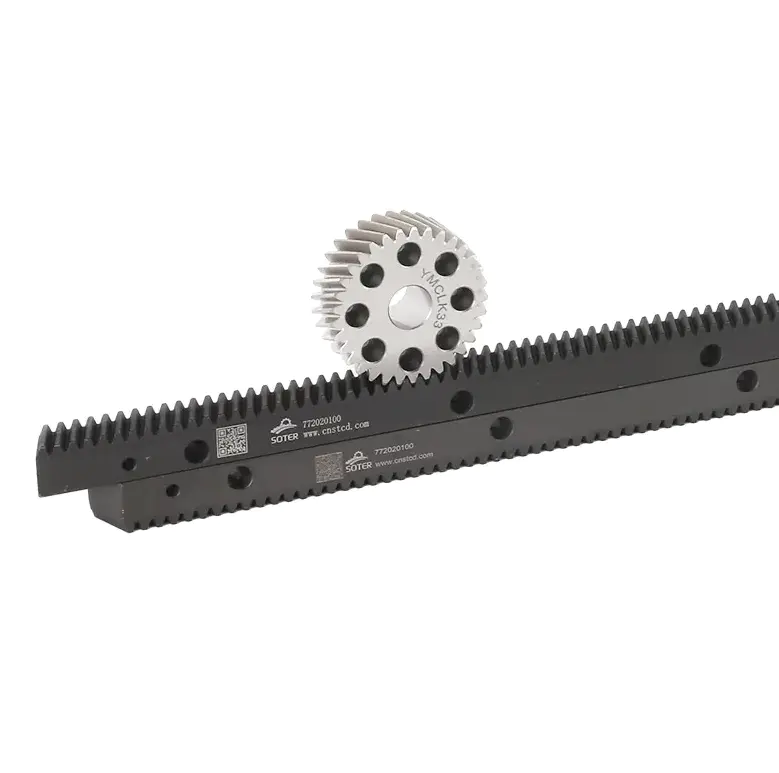
Factories keep pushing for tighter machine tolerances and fewer breakdowns to stay competitive. That's why engineers, machine designers and purchasing managers all pay close attention to how precision rack gears are manufactured end to end.
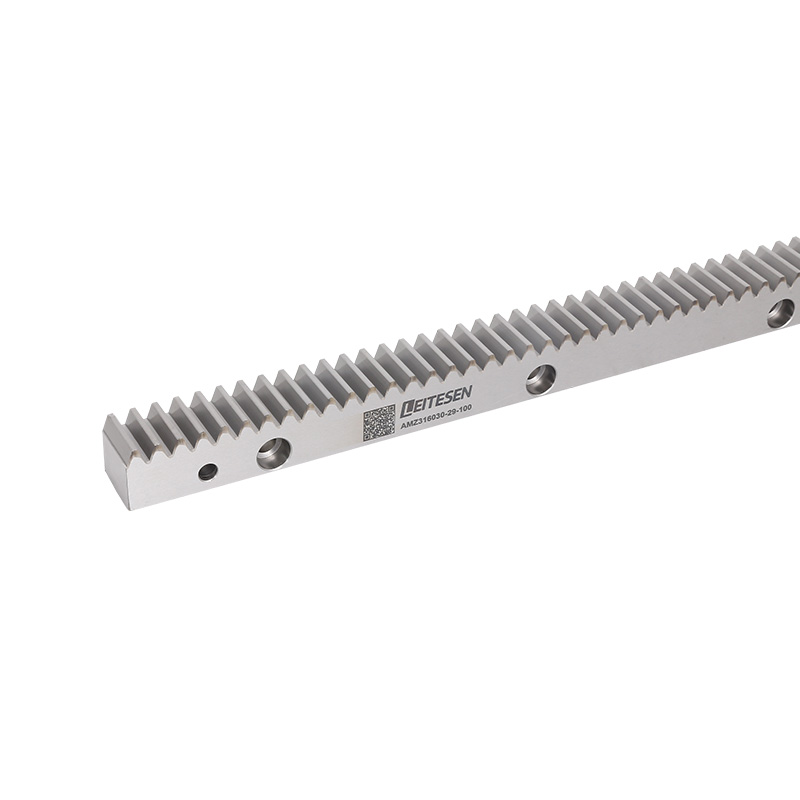
On the surface, rack gears feature a simple structure with a straight base and evenly arranged gear teeth. In actual industrial application, however, even tiny flaws or dimensional deviations during production can compromise mechanical coordination with pinions and other matching parts.
A mature, well-controlled manufacturing process eliminates subtle production errors, ensures smooth meshing between components, and stabilizes the overall motion output of industrial equipment. Every detailed production step lays the foundation for consistent long-term operation of rack gears.
The entire manufacturing workflow centers on four core links, each undertaking distinct functional purposes:
| Manufacturing Stage | Main Purpose |
|---|---|
| Material preparation | Creates a suitable foundation for production |
| Gear shaping | Forms the tooth structure |
| Surface improvement | Enhances durability and working performance |
| Inspection | Ensures consistency before delivery |
Only by strictly controlling every stage can manufacturers produce rack gears that meet diverse heavy-duty and precision industrial scenarios.
Raw material selection is the first critical step in rack gear production, directly determining the component's load capacity, stability and service life. Different industrial scenarios place vastly different performance demands on rack gears, so manufacturers never adopt a one-size-fits-all material solution.
For heavy-duty industrial equipment that runs continuously for long hours, raw materials need excellent rigidity and pressure resistance to withstand frequent heavy loads. For compact automated systems, materials prioritize smooth transmission performance and structural compatibility to adapt to refined equipment operation.
In actual selection, manufacturers mainly evaluate four practical factors:
Actual working environment including temperature, humidity and dust conditions
After confirming the material type, manufacturers will conduct strict pre-production inspection and pretreatment of raw materials to remove impurities and stabilize material properties, avoiding batch inconsistencies in subsequent processing.
The shaping process is the core link that determines the motion performance of rack gears. The precision of gear tooth profile, spacing and straightness directly affects the meshing accuracy with pinions, which in turn controls the stability of linear motion.
Manufacturers adopt professional precision machining equipment for tooth forming, strictly controlling every processing parameter to ensure neat tooth profiles, uniform spacing and no dimensional deviation. The whole process requires high operational precision and rich production experience.
In the forming stage, the core control objectives are clear:
Well-formed gear teeth can effectively avoid jitter, stuck movement and abnormal wear during equipment operation, enabling the rack gear to cooperate stably with the entire mechanical system.
After precision shaping, most rack gears undergo professional surface treatment. This process is not for aesthetic improvement, but to enhance the component's environmental adaptability and operational durability for complex industrial working conditions.
Professional surface processing can effectively optimize comprehensive performance in multiple dimensions:
Manufacturers will select targeted treatment processes based on the rack's application scenario. Components for heavy-load, high-frequency operation and those for conventional automated equipment adopt different surface strengthening schemes, ensuring the finished products perfectly match actual working needs.
Quality control runs through the entire rack gear manufacturing process, rather than being limited to final finished product inspection. Top manufacturers implement full-process quality management to eliminate hidden quality risks in advance.
The complete quality control system covers three key links:
Material inspection
All incoming raw materials are sampled and tested to verify material composition, hardness and toughness, eliminating unqualified raw materials from entering production and ensuring a reliable processing foundation.
Process monitoring
Workers and quality inspectors track key parameters in forming, machining and surface treatment in real time, adjusting processing techniques timely to avoid batch processing errors.
Final evaluation
Finished rack gears undergo comprehensive testing of dimensional accuracy, tooth profile precision and surface quality. Only products that fully meet design standards can be packaged and delivered.
This full-process control mode greatly reduces the failure rate of components after installation, ensuring stable and reliable operation of customer equipment.
With the continuous upgrading of industrial processing technology, traditional manual processing has been gradually replaced by intelligent precision equipment. Modern manufacturing technology has greatly improved the overall level of rack gear production.
Advanced manufacturing equipment and testing technology bring obvious improvements to production:
Even so, advanced equipment alone cannot guarantee high quality. Rich production experience, mature process formulas and standardized management are still core guarantees for stable product quality. Excellent rack gear manufacturing is the perfect combination of intelligent equipment and professional industry experience.
Industrial equipment types are becoming increasingly diversified, and the motion parameters, installation spaces and working environments of different devices vary greatly. Standardized rack gear products can no longer fully meet the personalized needs of refined industrial production.
Customized production has therefore become a mainstream industry trend. Manufacturers adjust production schemes according to customers'actual equipment conditions, focusing on multiple practical dimensions:
Customization is not a simple adjustment of product size. It is a targeted optimization of materials, processing precision and surface treatment processes based on actual application scenarios, ensuring the rack gear can maximize its performance in specific equipment systems.
The production of high-precision rack gears is a highly rigorous process that requires manufacturers to balance precision, quality, efficiency and personalized needs. Many practical challenges exist in actual production operations.
| Challenge | Manufacturing Consideration |
|---|---|
| Maintaining consistency | Requires careful process control |
| Meeting different application needs | Requires flexible production planning |
| Managing production efficiency | Requires coordination between equipment and workers |
| Supporting long-term reliability | Requires attention to material and finishing choices |
These challenges drive manufacturers to continuously optimize production processes, upgrade processing equipment and improve management systems, so as to produce rack gears that balance high precision, high durability and high adaptability.
Professional inspection is the final barrier to ensure the quality of finished rack gears. It verifies whether the processed products are completely consistent with the design standards and can adapt to industrial matching needs.
The inspection work mainly focuses on key functional indicators:
Industrial mechanical systems require extremely high component matching consistency. A single unqualified rack gear will affect the operation stability of the entire equipment. Strict inspection methods ensure that every delivered product is qualified and reliable, bringing stable cooperation confidence to both manufacturers and buyers.
Stable and accurate linear motion is a basic requirement of industrial equipment, so precision rack gears are widely used in multiple industrial fields. Manufacturers adjust production processes and product standards according to the differentiated needs of various industries.
| Industry | Usage Direction |
|---|---|
| Automation | Supporting machine movement systems |
| Manufacturing | Helping equipment perform repeated actions |
| Robotics | Assisting controlled positioning |
| Industrial machinery | Supporting heavy equipment operation |
This industry-oriented flexible production mode enables precision rack gears to always meet the refined and diversified development needs of modern industry.
Selecting a suitable rack gear manufacturer is key to ensuring equipment operation quality. Buyers should not only focus on product prices, but also comprehensively assess the manufacturer's overall production strength and service capability.
In actual procurement, core assessment indicators include:
Manufacturers with standardized production processes can accurately grasp customer needs and provide targeted high-quality solutions. Good communication and cooperation foundation also help reduce docking errors and improve procurement efficiency.
Driven by industrial automation and intelligent upgrading, the market demand for high-precision, high-stability motion components continues to rise. The rack gear manufacturing industry is also evolving toward refinement, flexibility and green production.
Future manufacturers will focus more on optimized upgrading in four directions:
As core motion components, precision rack gears will always be vital to industrial mechanical systems. Their manufacturing process perfectly reflects the integration of professional engineering design, mature production experience and market demand changes. Every rigorous production link ultimately serves the stable and efficient operation of modern industrial machinery.
Share:
Related Products

If you have cooperation intention, please leave a message for us or use the following ways to contact us.We will reply to you as soon as possible and provide you with more sincere service, thank you.
Production
QR Code
Call Us :
+86-13758631128
E-mail :
sttc@cnstcd.com
Add :
31 piazza road, ruoheng town, wenling city, taizhou city, zhejiang province, China.
Copyright © by Zhejiang Soter Transmission Technology Co., Ltd. Rights Reserved.

China Rack And Pinion For Sale

 English
 中文简体
中文简体
 Español
 русский