Sep 04, 2026
Most custom professional equipment deviates from fully standardized structural designs. These machines often have to operate within constrained spatial boundaries, follow unique motion trajectories, or pair with tailor-made components built for specific operational scenarios. Under such working conditions, off-the-shelf mechanical parts frequently fail to match the overall system configuration.
This is the core scenario where custom gear racks deliver unique practical value.
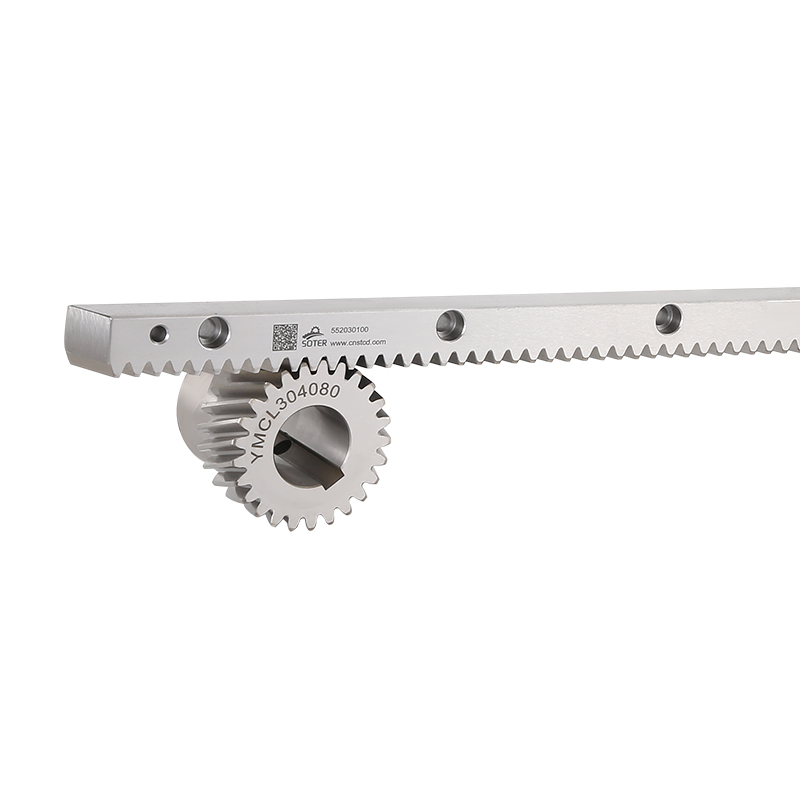
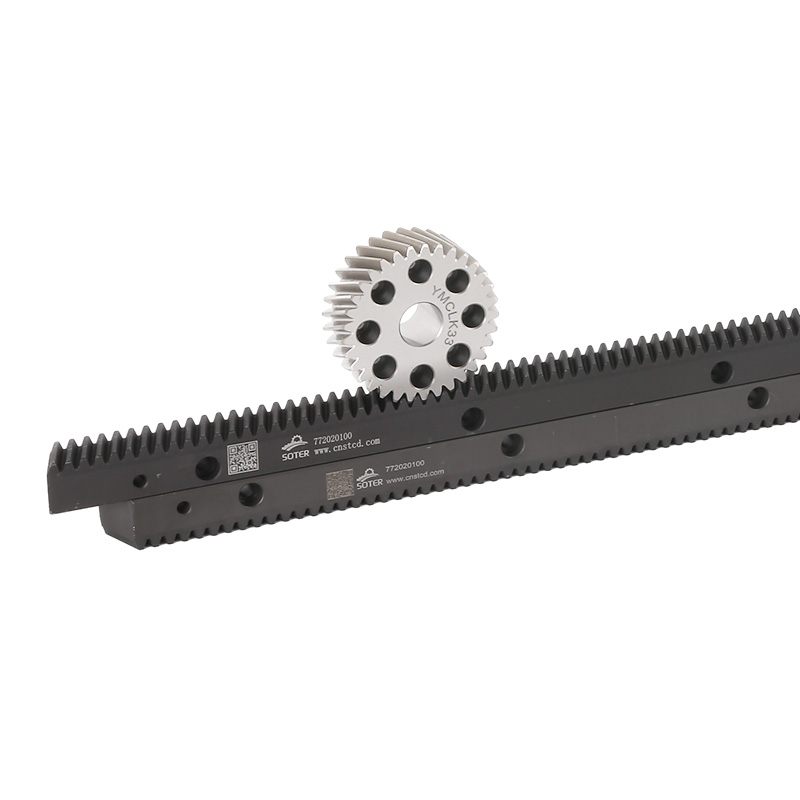
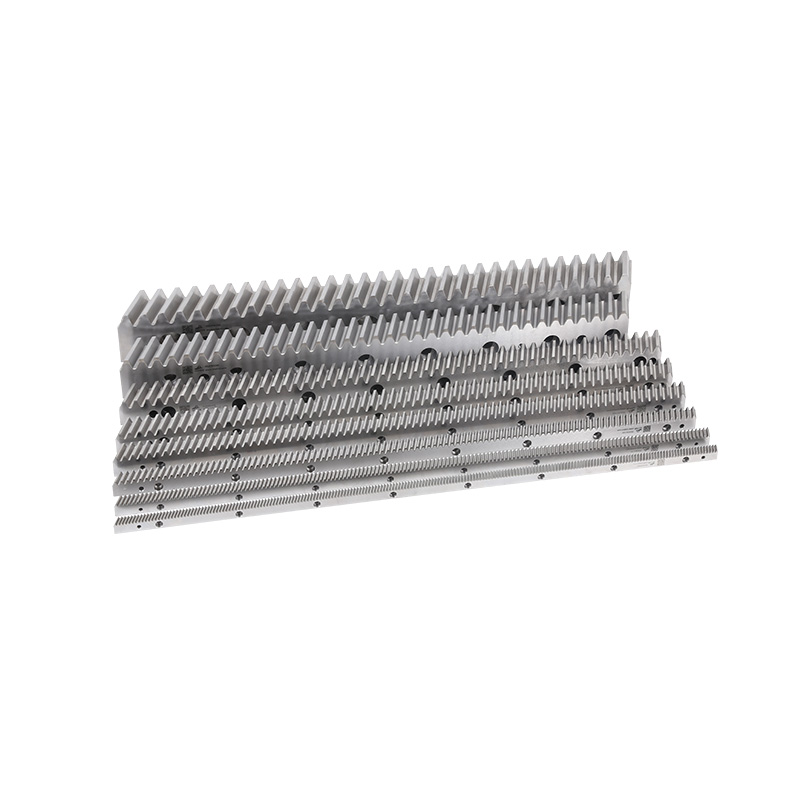
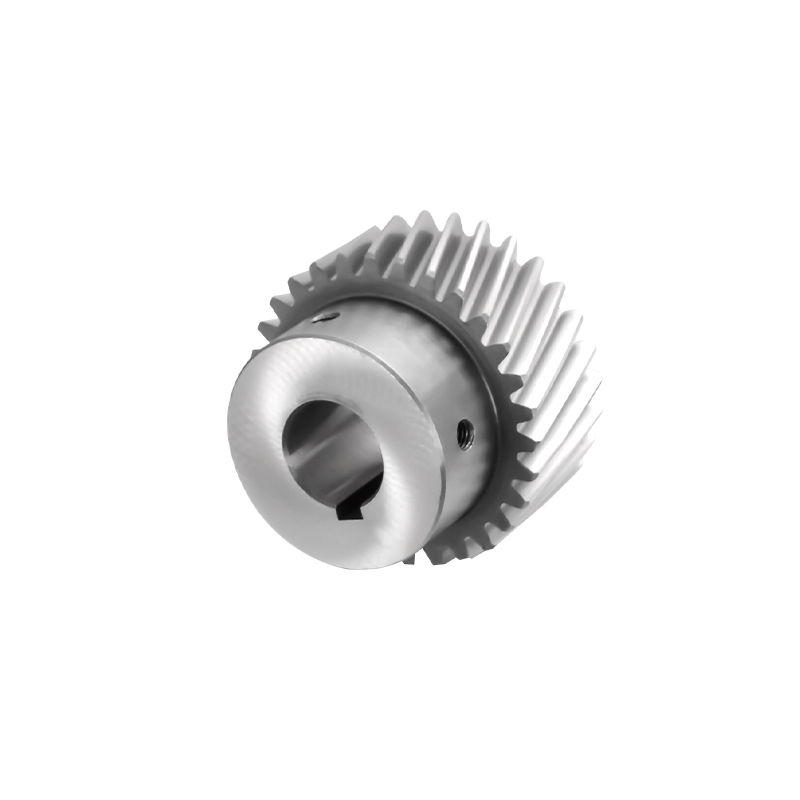
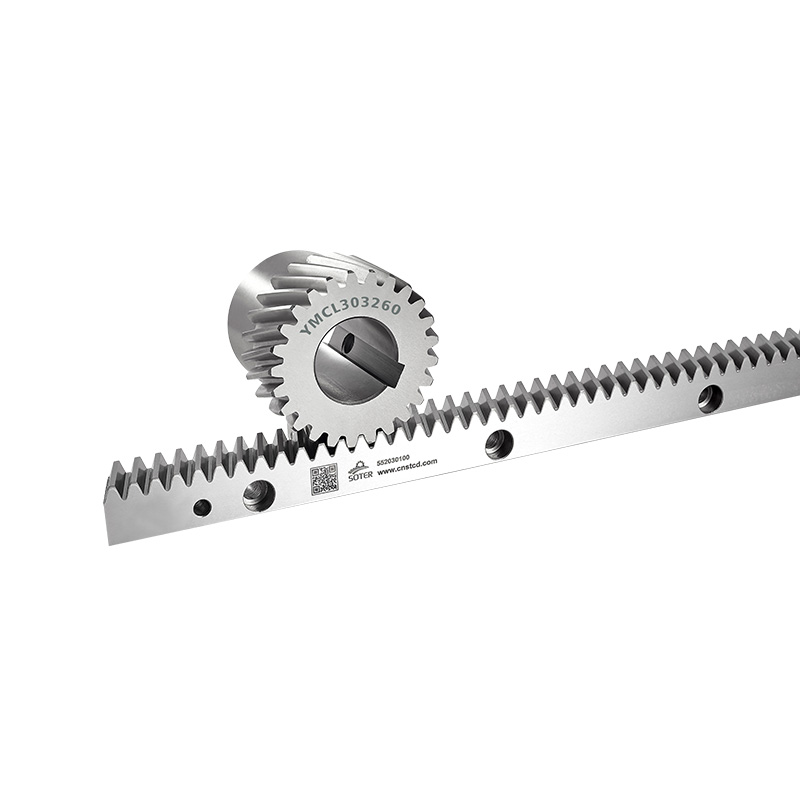
When paired with a matched gear, a gear rack enables linear motion transmission for mechanical systems. Though its functional principle seems straightforward, its installation position, dimensional parameters and structural design directly affect the coordination and operational efficiency of the entire equipment assembly.
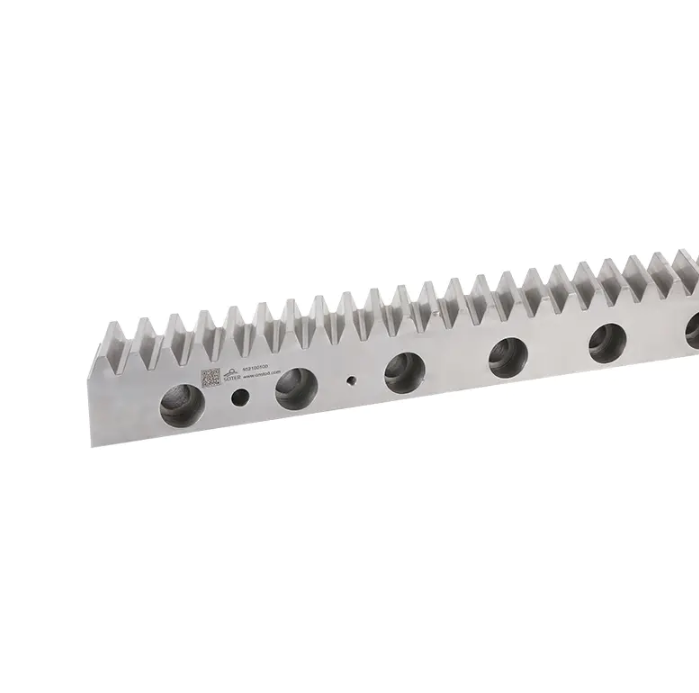
For specialized mechanical equipment, the focus of discussion is not whether custom gear racks can be manufactured technically. Instead, it lies in whether personalized customization can truly resolve actual design and operational pain points.
In real-world engineering applications, the feasibility of customization hinges on multiple key factors: the equipment's functional positioning, reserved installation space, preset motion parameters, and the matching relationship between the gear rack and adjacent mechanical parts.
Standard components are designed around common applications.
That makes them convenient for many machines. However, specialized equipment may have requirements that do not match a standard product.
A machine designer may be working with a particular layout. The gear rack may need to fit between other components. Its position may be influenced by the shape of the machine, the direction of movement, or the available installation area.
In these cases, customization can provide more freedom.
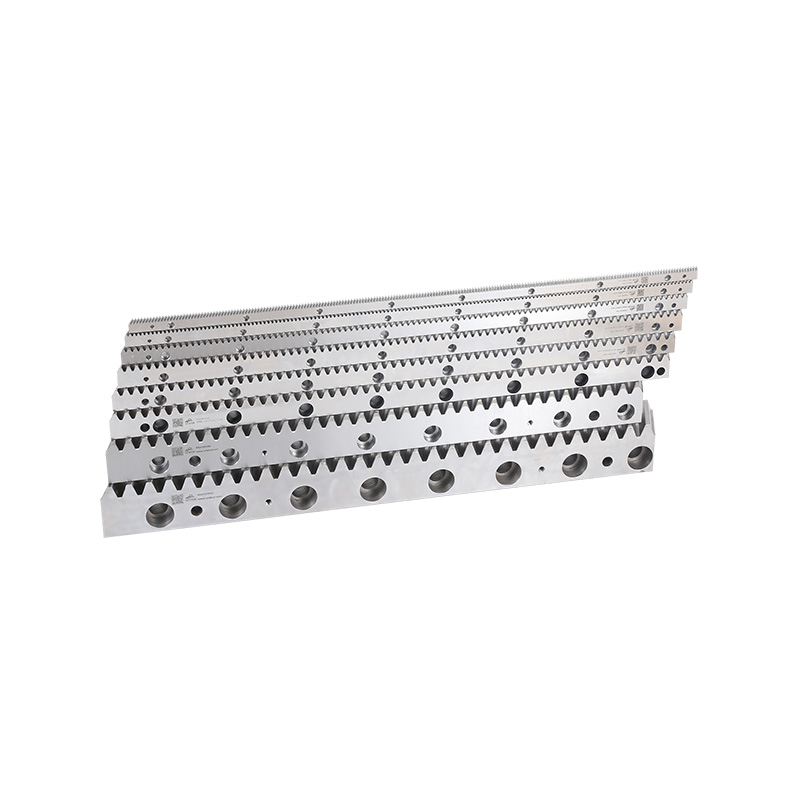
A custom gear rack can be developed around the actual application instead of forcing the machine design to adapt to an existing component.
Several situations can create a need for customization:
| Equipment Requirement | Why Customization May Matter |
|---|---|
| Limited Installation Space | Allows the Component to Fit the Available Layout |
| Special Movement Path | Helps Match the Intended Mechanical Arrangement |
| Existing Equipment | Can Support Compatibility With Other Components |
| Unusual Machine Design | Provides More Freedom During Equipment Development |
| Replacement Requirements | May Help Match an Existing Mechanical System |
| Application-Specific Use | Allows the Rack to Be Designed Around Its Intended Role |
This does not mean customization is always necessary.
If a standard gear rack already fits the equipment, using a standard product may be simpler. Customization becomes more attractive when a standard option creates compromises.
The decision should therefore begin with the machine rather than the rack.
A gear rack does not operate independently.
It works with a matching gear and other parts of the movement system. When the gear rotates, the rack provides a straight movement path. This basic relationship can be used in many types of machinery.
The exact arrangement can vary widely.
A rack may be installed horizontally, vertically, or in another position depending on the machine. It may support movement in an automated mechanism, positioning system, access system, or specialized piece of equipment.
This makes the surrounding design important.
It can be developed to fit the intended installation rather than requiring the entire machine to be redesigned around a standard part.
This can be particularly useful when equipment has already been developed to a certain stage.
Imagine a machine where the overall structure is already established, but the available space around the movement system is limited. Replacing the entire layout may create unnecessary changes. A customized rack may offer a more direct way to address the component-level requirement.
The value comes from compatibility.
When the rack fits naturally within the machine, designers have more freedom to maintain the intended equipment layout.
Customization can provide flexibility, but it also requires clearer planning.
The designer needs to understand what the gear rack is expected to do. The rack's role within the machine should be defined before production decisions are made.
Several questions can help:
Where will the rack be installed?
The available space can influence its overall design and connection with nearby components.
What type of movement is required?
The rack should match the intended direction and operating pattern.
What component will work with the rack?
The relationship between the rack and matching gear needs to be considered as part of the same system.
How will the rack connect with the machine?
Installation and fixing methods can influence the practical design.
Will the rack be used in a new machine or as a replacement?
A replacement application may require closer attention to existing components.
How will the equipment be maintained?
Accessibility can affect future inspection, adjustment, or replacement.
These questions help separate a genuine customization need from a simple preference.
It is useful when it addresses a specific requirement.
Design freedom is one of the main reasons customization attracts attention.
Mechanical designers often work with multiple constraints at the same time. The machine may need to fit within a particular structure. Components may need to remain accessible. Movement may need to follow a specific path.
A standard rack can work well when these requirements match its existing design.
When they do not, the machine may need to compromise.
Customization changes that relationship.
Instead of asking, "How can the machine fit this rack?" designers can ask, "How should the rack fit the machine?"
That difference can be significant during specialized equipment development.
It may allow designers to explore different layouts while keeping the movement system connected to the overall machine concept.
This does not mean customization removes every design limitation.
The rack still needs to work with the matching gear and surrounding components. Manufacturing considerations also remain important. A design that is difficult to produce may require changes before it becomes practical.
Good customization therefore involves cooperation between design and manufacturing.
The goal is to find a balance between what the machine needs and what can be produced consistently.
Customized gear rack design exerts a far-reaching impact on the entire equipment development process, rather than only optimizing a single component.
When the rack is tailor-made for specific equipment scenarios, designers can arrange peripheral components and structural frameworks around the rack's parameters, optimizing the overall machine structure, motion path layout, equipment operation space and later maintenance system planning.
Meanwhile, customized production promotes a more collaborative equipment development model.
Design teams put forward functional, structural and environmental demand parameters based on equipment application scenarios, while manufacturers feed back practical production constraints, process optimization suggestions and performance improvement schemes.
This two-way communication mechanism can effectively identify potential structural conflicts, assembly difficulties and maintenance hidden dangers in the early design stage.
For example, a rack design that fits the spatial size may have assembly obstacles, or a mechanically feasible scheme may increase the difficulty of daily equipment maintenance. These problems can be optimized and avoided in advance through early manufacturer intervention.
This collaborative model is especially critical for specialized equipment, as each customized machine has unique design indicators and application demands with no universal reference standard.
In this sense, custom gear racks are no longer just modified standard parts, but an indispensable part of the entire equipment integrated design system.
It can create practical value for both new equipment development and old equipment replacement, but their application purposes and core advantages differ significantly in the two scenarios.
For newly developed equipment, customized racks serve to realize and optimize the original design concept.
Designers can integrate the gear rack's parameters and structural characteristics into the overall equipment design at the initial development stage, realizing deep integration of the transmission system and the machine framework, and improving the overall coordination and operational stability of the equipment.
The replacement and upgrading of old equipment faces more rigid constraints.
Many legacy machines adopt non-standard component specifications that have been phased out by the market. Off-the-shelf standard gear racks cannot match the original installation size, gear parameters and motion coordination relationship.
In this case, customized racks become the only feasible solution for precise replacement.
The core evaluation standard for replacement customization is systematic compatibility.
The customized rack must be fully compatible with the original equipment's paired gears, mounting structure, motion trajectory and peripheral assembly relationship to ensure no performance deviation after replacement.
Therefore, replacement customization requires detailed field measurement and data sorting of the original equipment structure.
Sufficient original component parameters and operating environment data are the basis for accurate customized production. In contrast, new equipment customization has higher flexibility, allowing designers to adjust rack parameters synergistically with the overall equipment design.
Customization is closely connected with manufacturing flexibility.
A factory producing only standard gear racks may have limited ability to respond to unusual equipment requirements. A manufacturer with experience in customized products may be better positioned to discuss application-specific designs.
However, flexibility is not simply about accepting unusual requests.
It also involves communication.
The manufacturer needs to understand the purpose of the component. The customer needs to explain the operating environment and installation requirements clearly.
This exchange can influence the final product.
Several areas are particularly relevant:
| Development Area | Practical Consideration |
|---|---|
| Product Shape | Should Fit the Intended Machine Layout |
| Installation | Needs to Work With Surrounding Components |
| Matching Gear | Must Be Considered as Part of the Movement System |
| Material Choice | Should Suit the Intended Application |
| Surface Condition | Can Influence How the Component Fits Its Use |
| Maintenance | Should Be Considered During Equipment Planning |
| Production Approach | Needs to Support the Customized Design |
The exact priorities depend on the application.
A rack used in one type of equipment may have very different requirements from a rack used elsewhere.
This is why a flexible manufacturing approach can be useful for specialized machinery.
Price naturally matters when purchasing mechanical components.
But customization is rarely just a price comparison.
A lower-cost standard rack may appear attractive at the beginning. If it requires changes to the machine layout, additional adjustments, or compromises in installation, the apparent saving may become less meaningful.
A custom rack can have a higher initial cost because it is developed for a particular application. Yet the relevant question is whether that customization solves a problem that a standard component cannot address conveniently.
Buyers can consider several aspects together:
These questions provide a broader view of value.
The right choice depends on the machine.
For a straightforward application, a standard gear rack may remain practical. For specialized equipment with unusual requirements, customization may provide more useful flexibility.
The demand for specialized equipment is encouraging designers to think more carefully about component integration.
Machines are often developed around specific tasks. Their structures may be compact. Their movement systems may need to work within carefully planned spaces. Their components may need to communicate with other parts in a coordinated way.
This environment creates opportunities for customized mechanical components.
It can give designers another option when standard parts do not fit the intended concept.
It can also support equipment updates.
When an existing machine is modified, the original component arrangement may no longer match the new design. A customized rack can sometimes help connect the existing structure with the revised movement requirements.
This makes customization relevant beyond new machine development.
The broader trend is toward closer cooperation between equipment designers and component manufacturers. Instead of treating mechanical parts as isolated products, businesses are considering how each part contributes to the complete machine.
For gear racks, this means the discussion is moving beyond shape and size.
Application, installation, movement, compatibility, maintenance, and manufacturing flexibility all have a place in the development process.
A custom gear rack becomes a practical choice when it solves a clear equipment requirement and fits naturally into the wider mechanical system.
Share:

If you have cooperation intention, please leave a message for us or use the following ways to contact us.We will reply to you as soon as possible and provide you with more sincere service, thank you.
Production
QR Code
Call Us :
+86-13758631128
E-mail :
sttc@cnstcd.com
Add :
31 piazza road, ruoheng town, wenling city, taizhou city, zhejiang province, China.
Copyright © by Zhejiang Soter Transmission Technology Co., Ltd. Rights Reserved.

China Rack And Pinion For Sale

 English
 中文简体
中文简体
 Español
 русский