Sep 18, 2026
Industrial equipment often needs to move in a controlled direction.
A door slides across an opening. A machine part moves along a frame. A carriage travels between two fixed points. A handling system shifts from one position to another.
These movements may look simple from the outside. Behind them, however, there is usually a track and a rolling component working together.
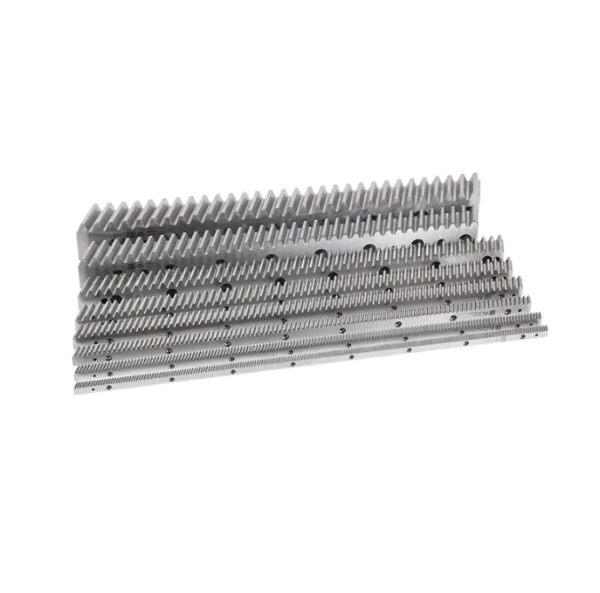
This is where V Track Rollers and Guide Rails come into the picture.
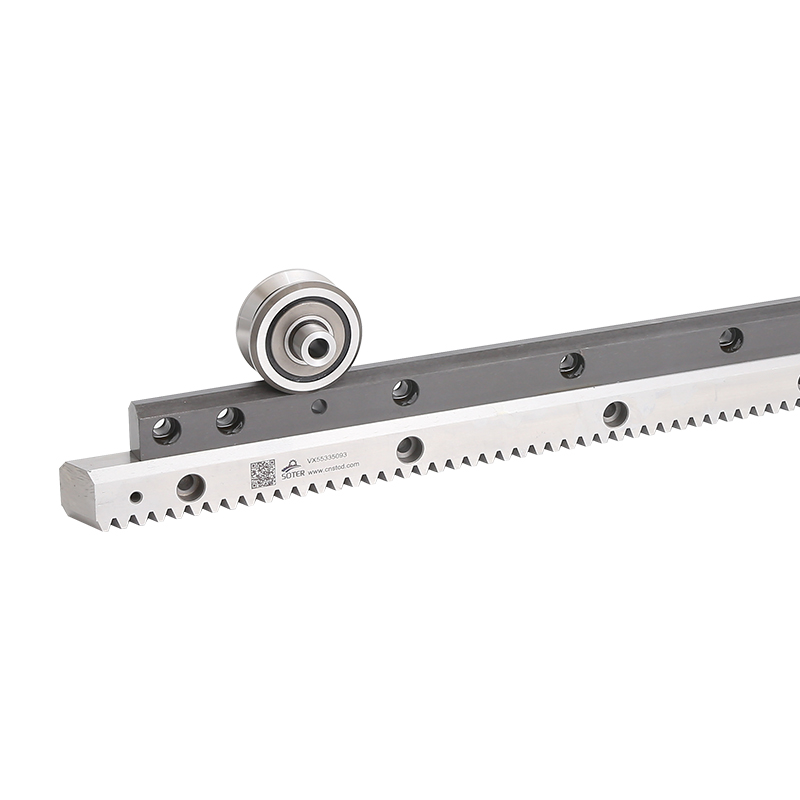
A V Track Roller is designed to run along a matching track. The guide rail provides the path, while the roller follows that path as the moving structure travels. Their shapes are designed to work together rather than function as unrelated components.
This arrangement can help create guided movement without requiring a complicated support structure.
For equipment manufacturers and industrial buyers, understanding this relationship can make product selection easier. The roller matters, but the guide rail matters just as much.
The basic relationship is easy to understand.
The guide rail creates the route. The V Track Roller follows it.
A V-shaped profile on the roller works with a matching track surface. As the roller moves, the shape helps keep it aligned with the rail.
The roller is usually connected to the moving part of the equipment. The guide rail is attached to the supporting structure. When the moving part travels, the roller moves along the stationary rail.
This creates a simple division of roles.
| Component | Main Role |
|---|---|
| V Track Roller | Supports and moves with the mobile structure |
| Guide Rail | Provides a fixed path for the roller |
| Mounting structure | Holds the roller or rail in position |
| Moving structure | Travels along the guided path |
Neither component should be considered in isolation.
A roller without a suitable rail has no defined path. A guide rail without a compatible roller cannot provide the intended rolling movement.
Their interaction is what creates the system.
The V shape is more than a visual feature.
It gives the roller and rail a defined contact relationship. The roller is not simply resting on a flat surface. Its profile is designed to engage with the matching rail.
This can help guide the moving component as it travels.
Imagine pushing a small object across a completely flat surface. The object may move in the general direction you expect, but it can also shift sideways.
Now imagine that the object follows a shaped path. Its movement becomes easier to control.
The same basic idea applies to a V Track Roller and Guide Rail system.
The matching shapes help the roller stay connected to the intended track.
This can be useful when equipment needs repeated movement along a defined route. Instead of relying only on a flat support surface, the roller and rail create a more controlled relationship.
The shape also helps make the rail part of the guidance system rather than treating it as a simple surface for the roller to contact.
For manufacturers, this can simplify the way a moving structure is supported and guided.
Moving equipment does not only need to move. It needs to move in the intended direction.
Sideways movement can become a concern in many applications. A carriage may need to travel along a straight path. A sliding structure may need to remain aligned with a frame. A door may need to follow its track rather than drift away from it.
The interaction between a V Track Roller and its Guide Rail helps address this requirement.
The V-shaped contact guides the roller along the rail. When the moving structure travels, the roller remains engaged with the track.
This can reduce unwanted lateral movement.
The effect becomes more noticeable when the equipment moves repeatedly. Small changes in direction can accumulate when guidance is poor. A well-matched roller and rail arrangement can provide a clearer path for the moving structure.
However, the result depends on the complete installation.
The roller, rail, mounting structure, and moving component all need to work together. A suitable roller cannot compensate for a poorly positioned rail or an unsuitable mounting arrangement.
This is why industrial buyers often need to consider the whole system rather than selecting a roller based only on its appearance.
It can be tempting to focus on the roller because it is the moving component.
The guide rail deserves equal attention.
The rail determines the path that the roller follows. Its shape, surface condition, mounting position, and overall arrangement can influence how the moving structure travels.
A suitable roller paired with an unsuitable rail may not produce the expected result.
The opposite is also true.
A well-designed rail still needs a compatible roller to create the intended movement.
This relationship can be compared to a wheel and road. The wheel provides rolling movement, but the road provides the surface and direction. The two work together.
With V Track Rollers and Guide Rails, the relationship is more closely defined because their profiles are intended to match.
For equipment designers, this means rail selection should happen as part of the same conversation as roller selection.
Questions about one component often lead directly to questions about the other.
V Track Rollers and Guide Rails can be used in equipment where a structure needs to travel along a defined path.
Industrial doors are one example.
Large doors often need to move repeatedly between open and closed positions. A guided rolling arrangement can help the door follow its intended route.
Material handling equipment can also use this type of system. A carriage or moving frame may need to travel between different positions within a working area.
Other possible applications include:
The specific application can change the material and design requirements.
A system used outdoors may need different considerations from one installed inside a controlled industrial environment.
A moving gate may have different needs from a machine carriage.
The common factor is the need for guided movement.
Where a structure needs to travel along a fixed route, the combination of roller and rail can provide a practical way to create that movement.
Matching the roller and rail is one of the important parts of system design.
The profiles need to work together.
The mounting arrangement also needs to be considered. The roller has to connect securely to the moving structure, while the rail needs to remain stable on its supporting structure.
The application itself should guide the selection.
Buyers can consider several questions:
These questions create a more useful starting point than simply asking for a particular roller.
A manufacturer can then understand the application and suggest a compatible combination.
Customization is possible in many industrial applications.
Not every machine has the same structure. Not every moving component uses the same mounting arrangement. A standard combination may not always fit a particular design.
Customization can involve the roller, rail, or both.
For the roller, buyers may discuss the shape, material, mounting arrangement, and surface finish.
For the guide rail, the discussion may include its shape, material, length, mounting method, and overall arrangement.
The visual design can also matter.
Some equipment manufacturers want the components to blend into an existing machine. Others may prefer a clear industrial appearance.
The practical requirements should remain central to the discussion.
A custom design should begin with the movement that needs to be supported.
A useful development process can look like this:
This gives the manufacturer a clearer picture of what the system needs to do.
It also allows changes to be made before the final product is produced.
For buyers, providing drawings or clear descriptions of the moving structure can make communication easier. The more clearly the application is described, the easier it becomes to discuss suitable material and design options.
Buying the roller alone is rarely enough.
The rail and the surrounding structure should also be considered.
A buyer can begin by identifying the actual movement required. From there, the roller and rail can be selected as a matched system.
Material is another consideration.
Different applications can create different demands. An indoor machine may operate in a relatively clean environment. Outdoor equipment may face moisture, dust, temperature changes, or other conditions.
Maintenance should also be part of the discussion.
A rolling system is expected to move repeatedly. Buyers should understand how the roller and rail are maintained and what parts may require attention during normal use.
Customization support can matter when the equipment has an unusual structure.
Communication is equally important.
A supplier should understand what the component is expected to do. Buyers can provide information about the moving structure, installation method, environment, and desired movement.
A practical checklist can include:
| Buyer Consideration | Why It Matters |
|---|---|
| Roller and rail compatibility | Helps create a matching contact relationship |
| Application | Defines the movement requirement |
| Material | Should suit the working environment |
| Mounting method | Connects the components with the equipment |
| Rail arrangement | Establishes the movement path |
| Maintenance | Supports continued operation |
| Customization | Helps when standard designs do not fit |
V Track Rollers and Guide Rails are therefore closely connected components. The roller provides rolling movement, while the rail establishes the route. Their matching profiles help guide the moving structure and reduce unwanted movement.
For industrial equipment designers and buyers, the important question is not simply which roller to purchase. It is how the roller, guide rail, mounting structure, and moving component will work together as one system.
Share:
Related Products

If you have cooperation intention, please leave a message for us or use the following ways to contact us.We will reply to you as soon as possible and provide you with more sincere service, thank you.
Production
QR Code
Call Us :
+86-13758631128
E-mail :
sttc@cnstcd.com
Add :
31 piazza road, ruoheng town, wenling city, taizhou city, zhejiang province, China.
Copyright © by Zhejiang Soter Transmission Technology Co., Ltd. Rights Reserved.

China Rack And Pinion For Sale

 English
 中文简体
 Español
 русский