Sep 25, 2026
Industrial equipment often needs to move in a specific direction.A carriage travels along a frame. A door opens across a fixed path. A machine component shifts between working positions. A handling unit moves from one area to another.
From the outside, these actions may look simple. Inside the equipment, however, movement depends on how different parts work together.This is where V Guide Rail design becomes relevant.
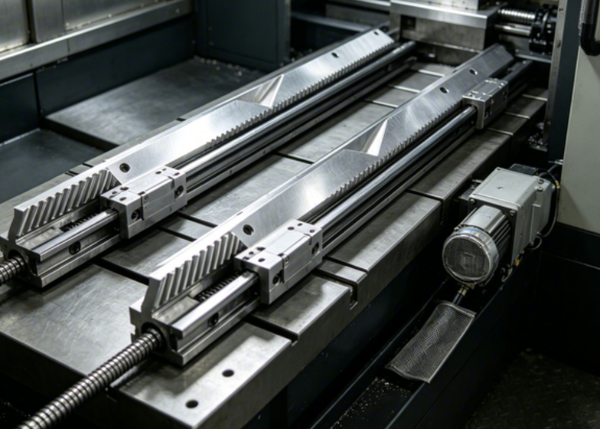
A guide rail gives a moving component a defined path. It helps keep movement organized rather than allowing the component to shift freely. The V-shaped design also creates a particular relationship between the rail and the rolling element used with it.
As equipment designs continue to focus on controlled movement, space use, maintenance, and practical operation, the role of guide rail design deserves more attention. The rail is not simply a track attached to a machine. Its form can influence how the moving system is arranged and how users interact with the equipment.
Linear movement is common across many types of equipment.
The movement may happen repeatedly or only when a particular operation is required. Either way, the moving component needs to follow a defined route.
Without suitable guidance, movement can become less predictable. A component may shift away from its intended path, create uneven contact with nearby parts, or require additional support from the surrounding structure.
A guide rail provides a physical path for movement. It gives the moving part something to follow.
This matters because industrial equipment is rarely designed around movement alone. The moving component usually needs to work alongside frames, covers, tools, sensors, doors, platforms, or other assemblies.
A controlled path makes it easier to organize these relationships.
The role of the rail can therefore be understood through several simple considerations:
| Design Consideration | Why It Matters |
|---|---|
| Movement direction | Keeps the moving component on a defined path |
| Structural arrangement | Helps organize moving and fixed components |
| Space use | Can support compact equipment layouts |
| Repeated movement | Provides a consistent path for recurring operations |
| Maintenance | Influences how accessible the moving assembly is |
| Equipment design | Can be integrated into different machine structures |
The guide rail may be a relatively small part of the overall machine, but its position can affect the way other components are arranged.
The basic idea behind a V Guide Rail is easy to understand.
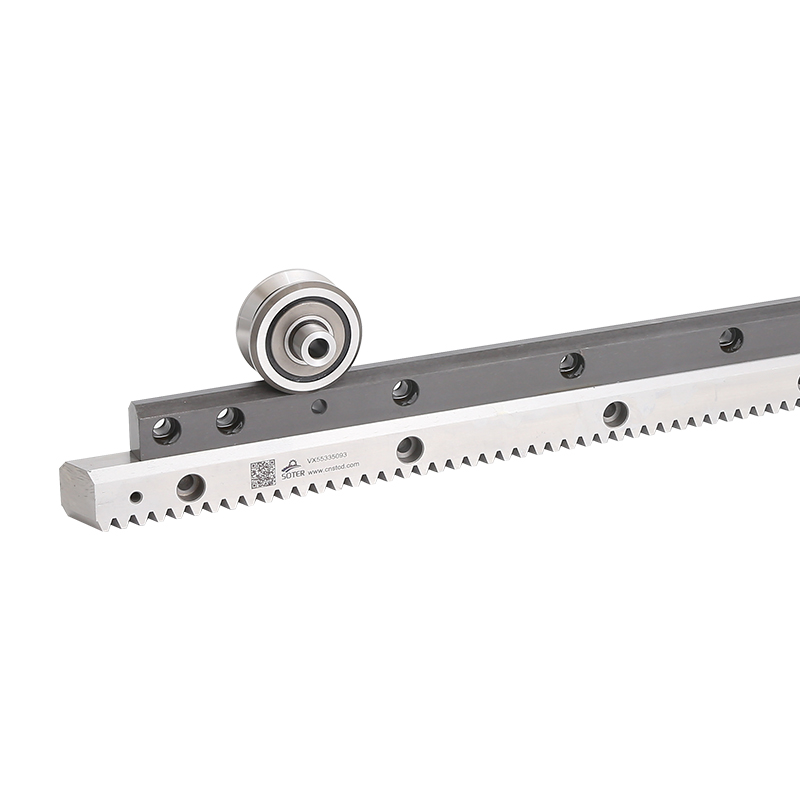
The rail provides a shaped track, while a compatible rolling element follows that track. As the rolling component moves, the rail helps define its direction.
The V-shaped contact arrangement is part of what makes this type of guide system useful in certain equipment designs.
Instead of relying only on a flat surface, the rail and rolling element interact through a shaped path. This can help the moving assembly remain aligned with the intended route.
The design also gives equipment designers another option when planning movement systems.
Different machines have different structural needs. Some have open frames. Others have enclosed sections. Some require a moving carriage to travel along the edge of a structure. Others need movement within a compact mechanical arrangement.
A V Guide Rail can be incorporated into these different layouts when its form matches the application.
The important point is that the rail should be viewed as part of the complete movement system.
Its performance does not exist separately from the frame, rolling components, mounting arrangement, and working environment.
The shape of a guide rail is not only an appearance choice.
It affects how the rail interacts with the rolling component and how the moving assembly is positioned.
A V-shaped profile creates a defined contact relationship. This can help the rolling element follow the rail while supporting controlled movement.
For equipment designers, this shape can also influence how the guide system fits into the surrounding structure.
A rail may need to sit along an edge, inside a frame, or beside another moving component. The available space can affect which guide arrangement makes sense.
This is one reason guide rail selection should not be separated from equipment design.
Each part affects the next.
A change in the rail arrangement may require a change in the rolling component. That can influence mounting space. The mounting space may then affect the wider equipment structure.
Such decisions are often made before the finished machine is assembled.
V Guide Rails can be considered for equipment that requires guided movement along a fixed path.
Their applications can vary because the basic need for controlled linear movement appears in many settings.
For example, a guide rail may be used in a sliding structure where a component needs to move from one position to another. It may also form part of a handling arrangement where a carriage travels along a frame.
Other applications may involve machine doors, access structures, positioning assemblies, or moving platforms.
The exact use depends on the equipment and the way movement needs to take place.
Some common application considerations include:
These examples show why V Guide Rail design is not limited to one type of machine.
The application determines how the rail should be positioned, supported, and combined with other components.
Equipment design often involves working within limited space.
A machine may need to include moving parts, structural supports, electrical components, protective covers, and working areas without creating unnecessary obstacles.
The guide system becomes part of this planning process.
A poorly considered rail arrangement can make the surrounding structure harder to organize. A suitable arrangement can make the movement path easier to understand and integrate.
This does not mean that one guide rail design will suit every machine. Instead, the focus should be on matching the rail arrangement with the actual equipment structure.
Several questions can help during the design stage:
These questions are simple, but they can prevent movement considerations from being treated as an afterthought.
The guide rail should have a clear role within the equipment rather than being added only after the main structure has already been decided.
Movement systems need attention over time.
Even when a machine is designed for routine operation, moving components may require inspection, cleaning, adjustment, or replacement during their service life.
Guide rail design can influence how easy these tasks are to carry out.
Accessibility is particularly important.
If a rail is positioned behind several other components, routine inspection may become inconvenient. If the moving assembly is easier to reach, maintenance work may fit more naturally into normal equipment care.
The surrounding environment also matters.
Dust, debris, moisture, and other conditions may affect moving components. The rail arrangement should therefore be considered alongside the conditions in which the equipment will operate.
Maintenance planning can include:
| Maintenance Question | Design Consideration |
|---|---|
| Can the rail be inspected easily? | Consider its position within the machine |
| Can dirt or debris reach the movement area? | Consider the surrounding environment |
| Can moving parts be accessed? | Leave practical access where needed |
| Is routine cleaning required? | Consider how the rail fits into maintenance work |
| Could components need replacement? | Think about future access during the design stage |
This approach moves maintenance from a later concern into the original equipment planning process.
Buyers often begin with basic product questions.
They may want to know the available design, material, mounting method, or overall cost. These details matter, but they are easier to evaluate when the actual application is clearly defined.
A buyer can start by describing the movement requirement.
Is the rail intended for a machine door? A moving carriage? A handling system? A positioning structure?
The answer changes the context of the purchase.
It is also useful to consider how the rail will work with the other parts of the equipment. A guide rail should not be selected as an isolated component if its function depends on a compatible rolling assembly and supporting structure.
The following checklist can make supplier discussions more practical:
Clear communication can be especially useful when the application is customized.
Instead of simply asking for a V Guide Rail, buyers can explain where the rail will be used and what the moving assembly needs to do. This gives the supplier more context when discussing suitable options.
As equipment becomes more integrated, individual components are increasingly considered as parts of a wider system.
A guide rail is a good example.
It may look like a straightforward mechanical component, yet its placement can affect the frame, moving carriage, access area, maintenance process, and overall equipment layout.
This creates a different way to approach guide rail selection.
Rather than asking only whether a rail can support movement, designers and buyers can consider how it fits the complete machine.
The process can involve several connected questions:
This broader view can make the selection process more practical.
It also explains why V Guide Rail design is receiving more attention in controlled linear movement applications. The rail is not simply responsible for creating a path. It becomes part of how the machine organizes movement, space, access, and daily operation.
Related Products

If you have cooperation intention, please leave a message for us or use the following ways to contact us.We will reply to you as soon as possible and provide you with more sincere service, thank you.
Production
QR Code
Call Us :
+86-13758631128
E-mail :
sttc@cnstcd.com
Add :
31 piazza road, ruoheng town, wenling city, taizhou city, zhejiang province, China.
Copyright © by Zhejiang Soter Transmission Technology Co., Ltd. Rights Reserved.

China Rack And Pinion For Sale

 English
 中文简体
中文简体
 Español
 русский