Oct 02, 2026
Large mechanical systems often need to move heavy parts in a controlled direction. A machine may need to open, close, lift, position, adjust, or move a working part along a defined path. Behind these actions, there is usually a motion system that transfers movement from one part to another.
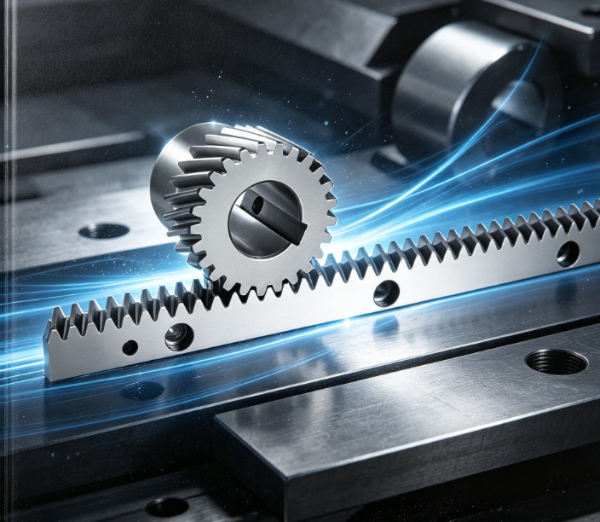
A Heavy Duty Rack And Pinion can play an important role in this process.
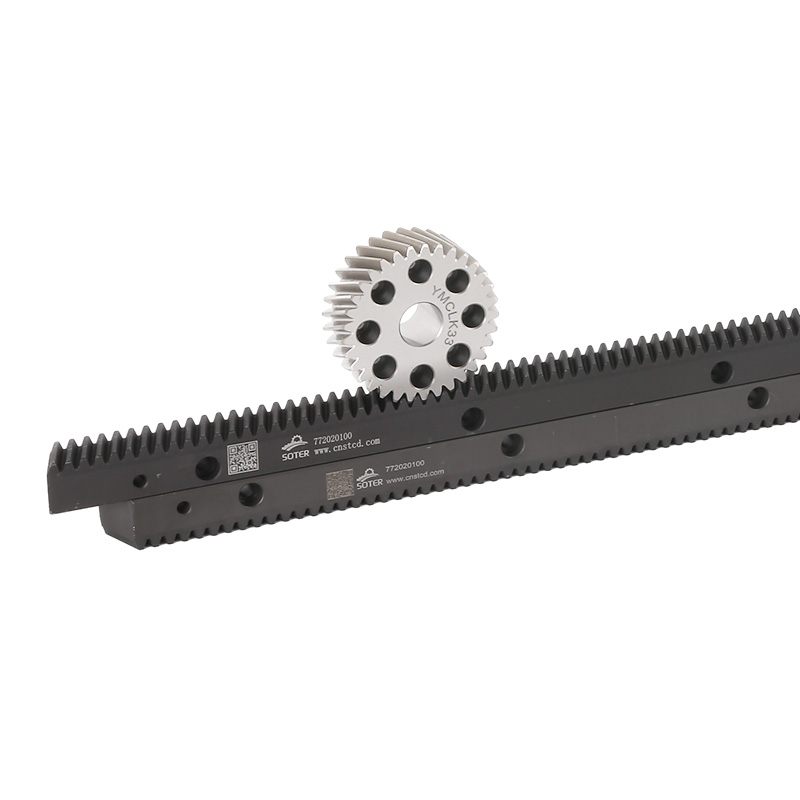
The basic idea is easy to understand. A pinion transfers rotary movement to a rack, while the rack moves in a straight direction. This simple relationship can become useful when a large machine needs controlled linear movement.
However, using a rack and pinion in a large mechanical system is not only about choosing a larger component. The rack, pinion, supporting structure, installation method, and working environment all need to work together.
For equipment manufacturers and industrial buyers, understanding this relationship can make product selection and system planning more practical.
Large machines often contain moving sections that cannot rely on simple manual movement. A working platform, door, carriage, positioning part, or other mechanical section may need to travel along a specific path.
A Heavy Duty Rack And Pinion provides a direct way to convert rotary movement into linear movement.
The pinion rotates, and its teeth engage with the rack. As the pinion turns, the rack moves along its length. This movement can then be connected to another part of the machine.
The arrangement can be useful because the movement is easy to relate to the rotation of the pinion. The machine designer can build the drive system around this relationship rather than relying on a less direct movement arrangement.
Large mechanical systems may also require movement across a relatively long working area. A rack can extend along the required path, while the pinion travels with the moving section or works with the rack as part of the fixed structure.
This makes rack and pinion systems suitable for equipment where linear movement is an important part of the machine's operation.
| Mechanical Need | Role of Rack And Pinion |
|---|---|
| Linear movement | Transfers rotary movement into straight movement |
| Controlled positioning | Helps move a working part along a defined path |
| Long movement path | Allows movement along an extended rack |
| Mechanical coordination | Connects the drive system with a moving structure |
| Repeated movement | Supports regular back-and-forth machine actions |
The value of the system comes from how naturally it fits into the overall machine structure.
The working relationship between the two parts is relatively straightforward.
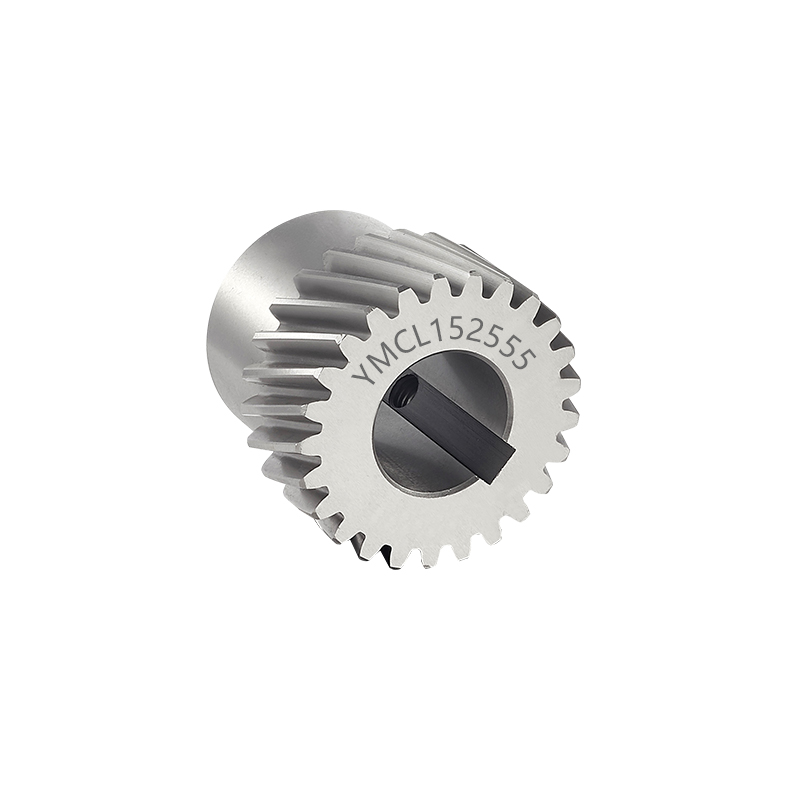
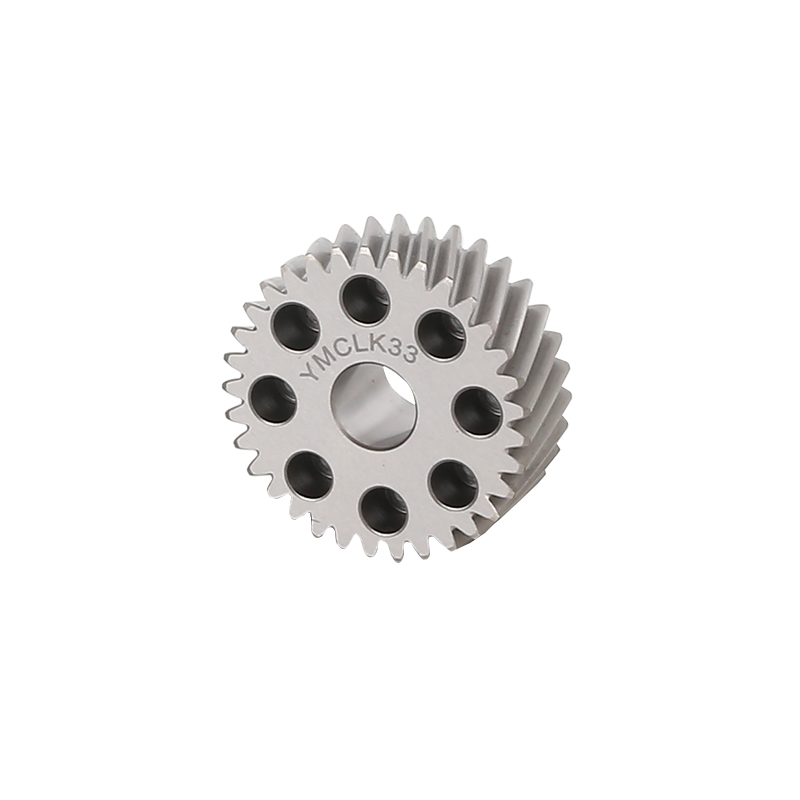
The pinion is the rotating part. The rack is the straight toothed part. When the pinion rotates, its teeth engage with the teeth on the rack. This interaction causes the rack to move.
The direction of movement depends on the direction in which the pinion rotates.
This simple principle allows a rotary drive to create linear movement without requiring a complicated arrangement between the drive source and the moving component.
In a large mechanical system, the rack may be fixed to the main structure while the pinion is connected to the moving section. In another arrangement, the pinion may remain in a fixed position while the rack moves.
The choice depends on the machine layout.
What matters is that the movement path is planned as part of the complete mechanical structure. The rack should not be treated as an isolated component. Its position affects the location of the pinion, the supporting parts, and the moving section.
A practical system therefore involves several connected considerations:
When these elements are considered together, the rack and pinion becomes part of the machine's movement architecture rather than simply a gear component.
Large mechanical systems usually place greater demands on their moving components. The equipment may have a substantial structure, repeated movement, or a working environment that places additional pressure on the drive system.
This is where the design of a Heavy Duty Rack And Pinion becomes important.
The component needs to fit the movement requirements of the machine. It also needs to work with the supporting structure and other mechanical parts.
A suitable design may need to consider:
The rack and pinion should not be expected to carry every mechanical responsibility by itself. A properly designed system distributes different functions among different components.
For example, supporting structures can guide the moving section, while the rack and pinion transfers movement. This separation helps the machine designer organize the system more clearly.
The installation position also matters. If the rack is placed on a structure that moves unevenly, the gear engagement can be affected. If the supporting parts are not properly aligned, movement may become less consistent.
For this reason, Heavy Duty Rack And Pinion selection is closely connected with machine design.
One reason rack and pinion systems appear in different types of industrial equipment is their flexible arrangement.
A rack does not need to define the entire machine. It only needs to be integrated into the section where linear movement is required.
Consider a machine with a large moving platform. The platform may need to travel from one position to another along a fixed path. A rack can be installed along that path, while a pinion connects the drive system to the platform.
Another machine may use a moving door or access section. In this case, the rack and pinion can help create controlled opening and closing movement.
There are also machines where positioning is more important than continuous travel. A working component may need to move between different areas during operation. A rack and pinion can provide a mechanical connection between the drive and the moving part.
| Machine Structure | Possible Rack And Pinion Role |
|---|---|
| Moving platform | Supports controlled linear travel |
| Large machine door | Helps create opening and closing movement |
| Positioning equipment | Moves a working section between locations |
| Material handling system | Connects drive movement with a moving carrier |
| Industrial machinery | Transfers movement between drive and working parts |
| Automated equipment | Supports repeated linear motion |
The actual application depends on the machine design. The same basic rack and pinion principle can be adapted to different structures when the movement requirements are clearly understood.
A Heavy Duty Rack And Pinion cannot work effectively when it is considered separately from the rest of the machine.
The rack needs a stable place to be installed. The pinion needs a suitable connection to the drive system. The moving section needs proper support. All of these parts influence how the system behaves during operation.
Structural coordination can be considered from several directions.
The rack needs to follow the intended movement path. Its position should match the location of the moving section and pinion.
The pinion needs to connect properly with the part that creates or transfers rotation. Its movement should correspond with the machine's intended direction.
The supporting frame holds important components in their working positions. A suitable structure can help keep the relationship between the rack and pinion stable.
The moving component should have its own support and guidance. The rack and pinion should transfer movement rather than compensate for an unsuitable support structure.
Large machines may need regular inspection or maintenance. Designers can consider access during the early planning stage instead of treating it as an afterthought.
These points show why rack and pinion selection often becomes part of a broader mechanical design discussion.
Many industrial machines perform the same movement again and again.
A door may open and close. A platform may travel between working positions. A carriage may move along a production area. A positioning section may repeatedly move into place and return.
In these situations, movement consistency becomes important.
A rack and pinion creates a direct mechanical relationship between rotation and linear movement. This can make it easier to integrate repeated movement into the machine's operating sequence.
The system can also be arranged for movement in different directions. When the pinion rotates one way, the rack moves in one direction. When the rotation changes, the rack can move in the opposite direction.
This makes the arrangement useful for back-and-forth machine actions.
However, repeated movement also makes system planning more important. The rack and pinion need to work with the supporting structure over the full movement path. The machine should also provide appropriate access for inspection and maintenance.
A practical design may therefore look at the movement cycle as a complete process:
This relationship is simple, but it becomes meaningful when applied to a large mechanical system.
For buyers, the product name alone does not provide enough information.
A Heavy Duty Rack And Pinion should be considered in relation to the machine where it will be installed. Different equipment can have very different movement requirements.
A buyer can start by defining the application.
Is the rack intended for a moving platform? Is it part of an automated machine? Will it operate indoors or in a more demanding working environment? Does the machine require repeated movement? How much installation space is available?
These questions can help narrow the product requirements before supplier discussions begin.
A simple purchasing checklist can include:
| Buyer Consideration | Why It Matters |
|---|---|
| Application | Defines how the rack and pinion will be used |
| Movement direction | Helps determine the required arrangement |
| Machine structure | Affects installation and component coordination |
| Working environment | Influences material and protection considerations |
| Movement frequency | Helps clarify long-term operating needs |
| Customization | May be useful for special machine designs |
| Supplier communication | Helps avoid misunderstandings during production |
| Inspection and support | Can assist with ongoing equipment management |
It is also useful to provide the supplier with information about the complete application rather than only asking for a product price.
A supplier may need to understand the machine layout, movement requirements, installation position, and intended working conditions before discussing a suitable solution.
This can make communication more efficient and reduce unnecessary changes later in the purchasing process.
Not every large mechanical system follows the same design.
Some machines use a standard arrangement. Others require a rack and pinion that fits a particular structure or movement path. This creates a need for communication between the equipment designer and the manufacturer.
A Heavy Duty Rack And Pinion manufacturer may be involved in several stages of the process.
The discussion can begin with the application. The manufacturer can learn where the rack and pinion will be used and how they will connect with the machine.
The next stage may involve reviewing the product design. This can include the overall shape, installation arrangement, connection method, and relationship between the rack and pinion.
Production planning then needs to follow the agreed design.
For custom applications, clear communication is especially important. A drawing, product sample, or application description can help both sides understand the intended result.
This approach allows Heavy Duty Rack And Pinion to be treated as part of a complete mechanical solution instead of an isolated purchase.
For equipment manufacturers, that difference can matter. A rack and pinion may appear to be a relatively small part of a large machine, but its position in the movement system gives it an important role. When the rack, pinion, supporting structure, drive system, and moving section are planned together, the complete machine can have a clearer and more organized movement arrangement.
Share:
Related Products

If you have cooperation intention, please leave a message for us or use the following ways to contact us.We will reply to you as soon as possible and provide you with more sincere service, thank you.
Production
QR Code
Call Us :
+86-13758631128
E-mail :
sttc@cnstcd.com
Add :
31 piazza road, ruoheng town, wenling city, taizhou city, zhejiang province, China.
Copyright © by Zhejiang Soter Transmission Technology Co., Ltd. Rights Reserved.

China Rack And Pinion For Sale

 English
 中文简体
中文简体
 Español
 русский