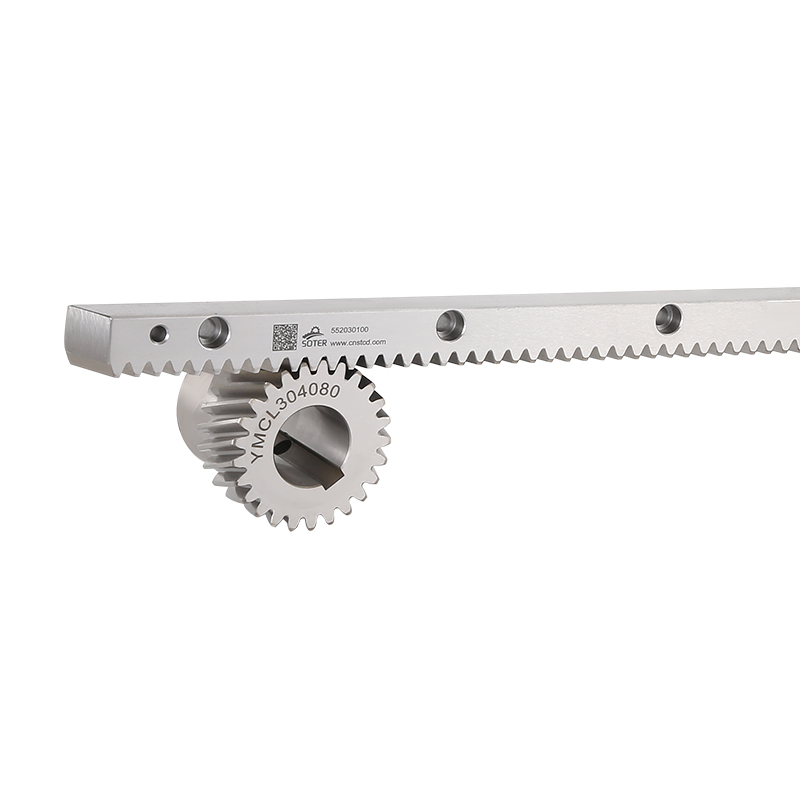
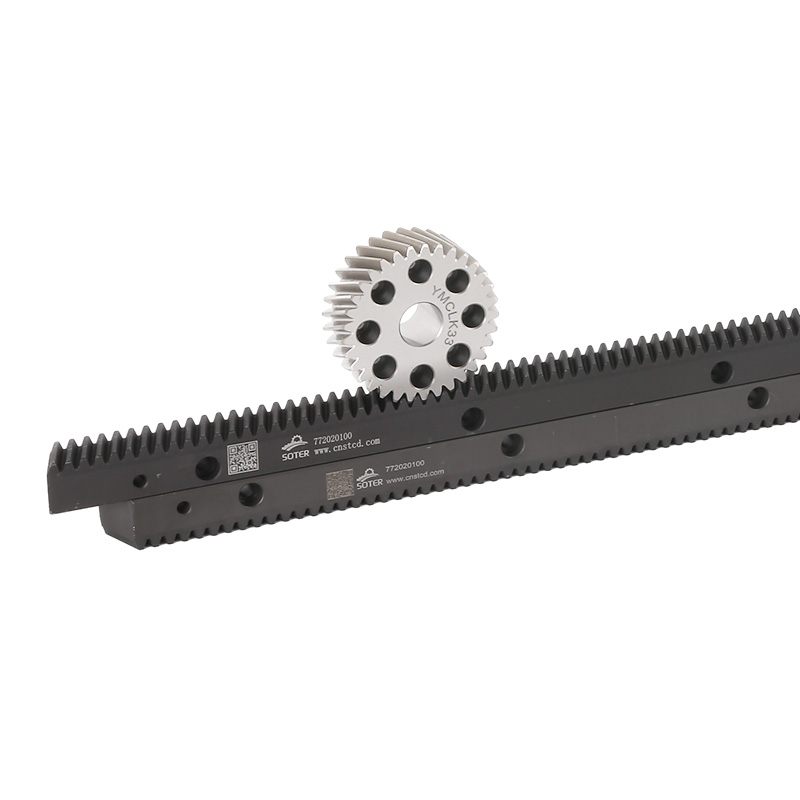
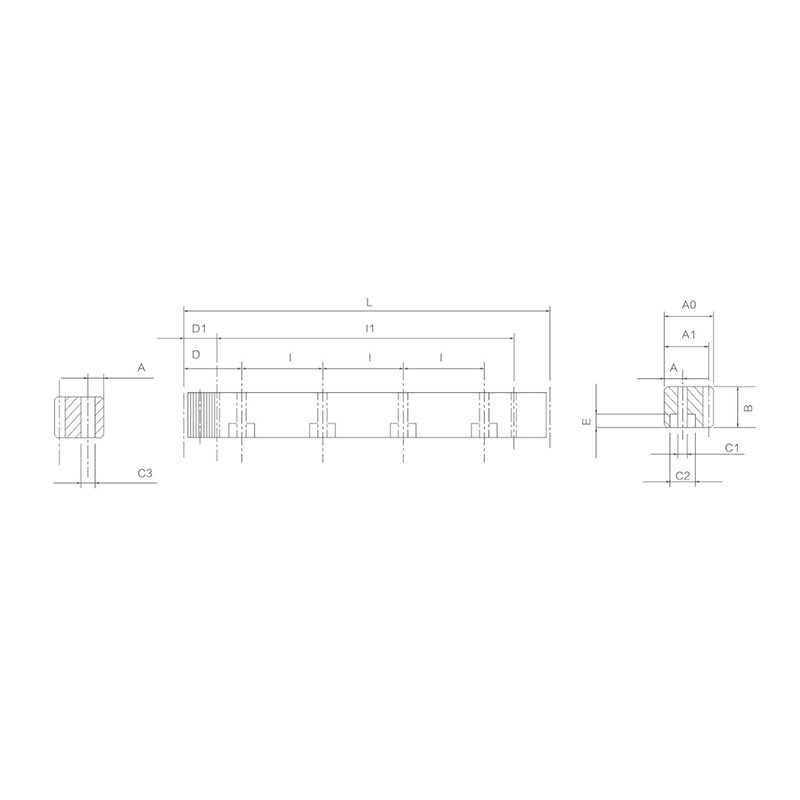
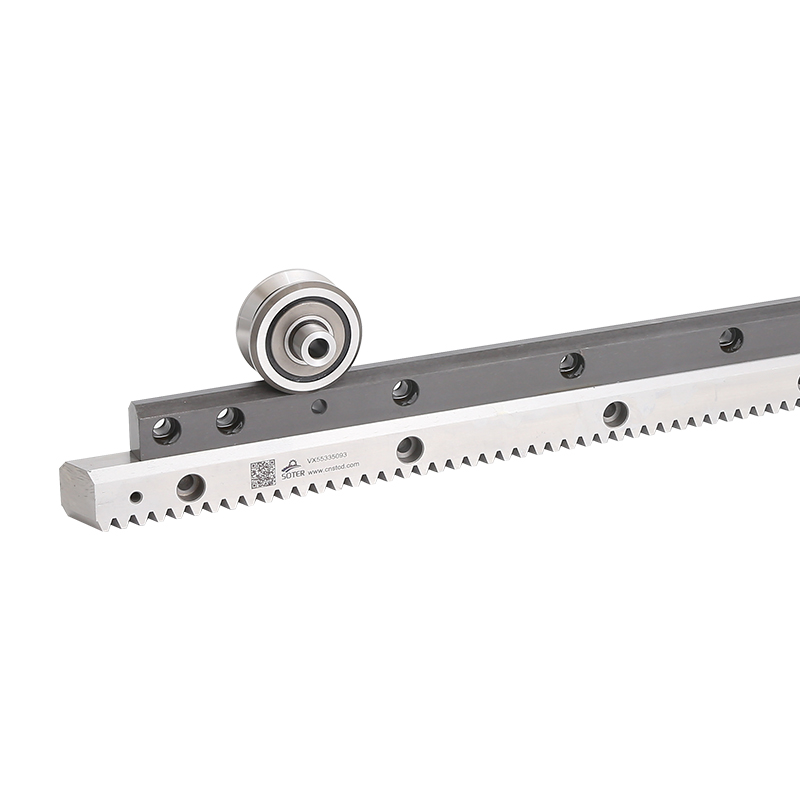
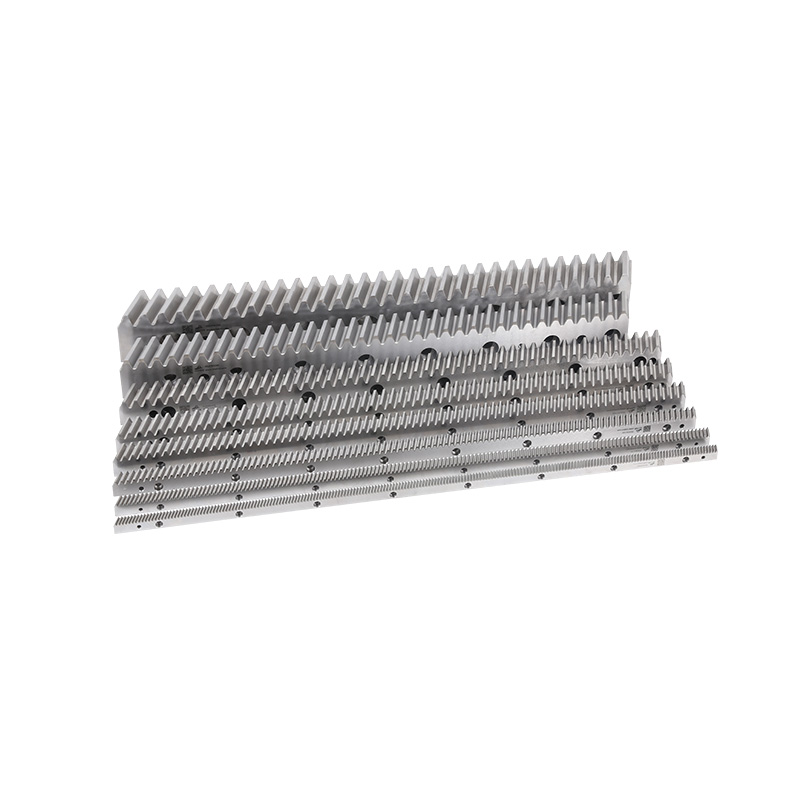
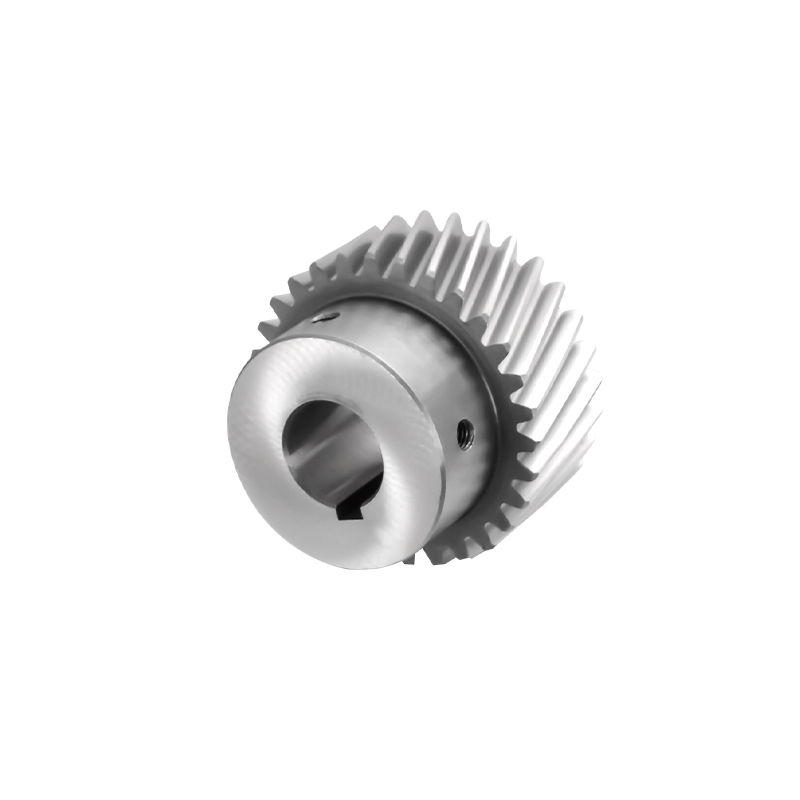
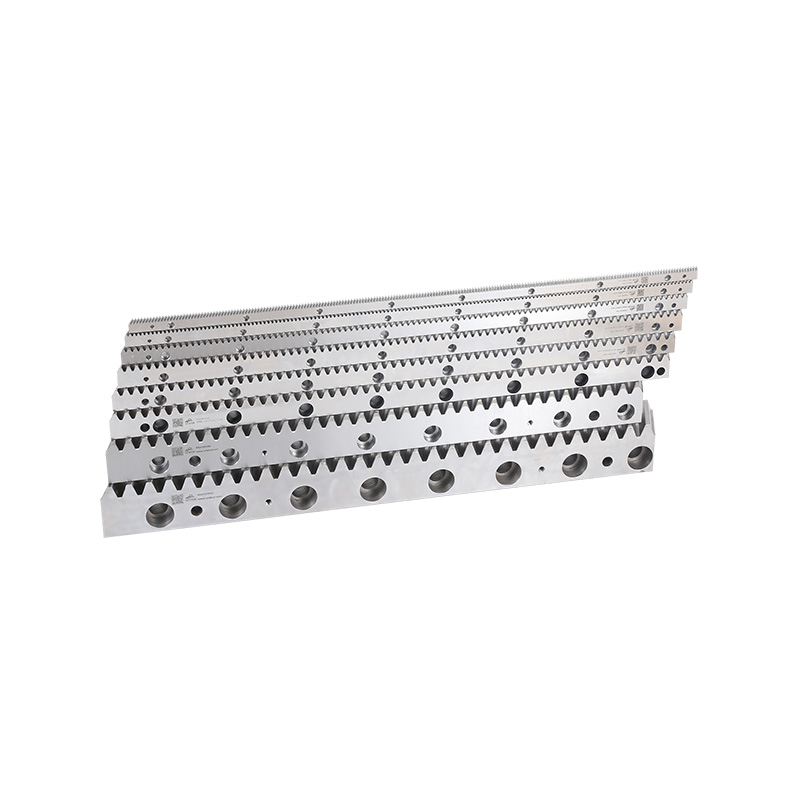
Straight Gear Rack Factory products and ball screws are two commonly used components in linear motion systems, including CNC machines, automation lines, and robotic equipment.
Both systems are designed to convert rotational motion into linear motion, but their mechanisms, load capacities, and performance characteristics differ.
Choosing between a gear rack and a ball screw depends on factors like stability, accuracy, speed, maintenance, and application requirements.
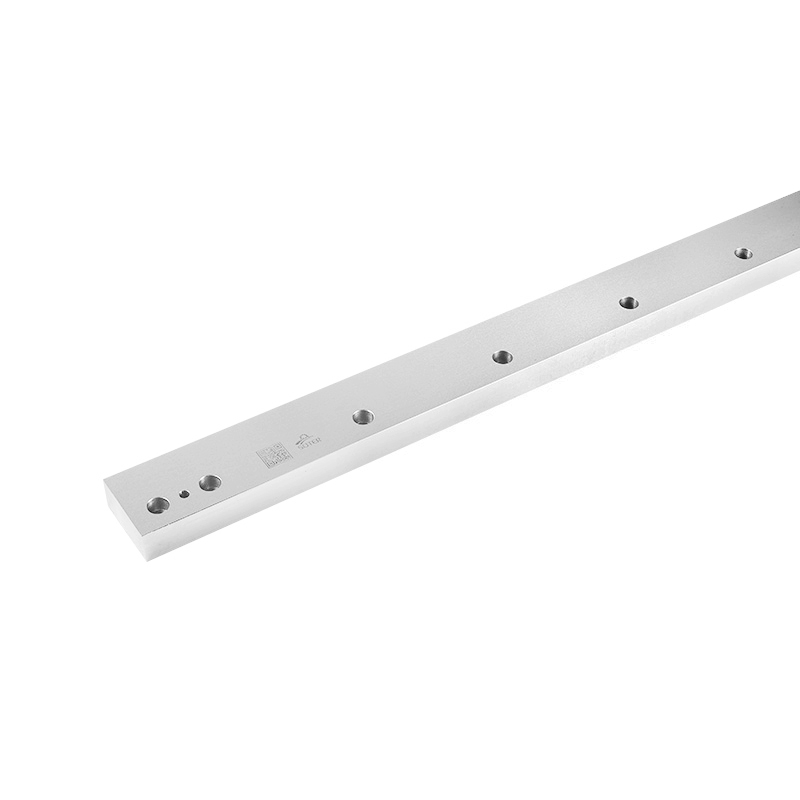
Structural Differences Between Straight Gear Racks and Ball Screws
Straight Gear Rack:
- Uses a linear toothed rack engaged with a rotating pinion.
- Converts rotary motion to linear motion directly through gear engagement.
- It can handle high radial loads and is relatively simple in design.
Ball Screw:
- Uses a threaded screw and nut with recirculating balls to reduce friction.
- Provides smooth, low-backlash motion with high mechanical efficiency.
- Capable of precise positioning but sensitive to alignment and contamination.
Positional Accuracy and Repeatability
Ball Screw Systems:
- Generally offer higher positional accuracy due to reduced backlash and minimal tooth play.
- Suitable for applications requiring micrometer-level precision, such as CNC machining and metrology equipment.
Straight Gear Rack Systems:
- Slight backlash between the pinion and rack can cause minor positional errors.
- Accuracy is influenced by gear quality, pitch precision, and mounting alignment.
- Improvements like preloaded racks or anti-backlash gears can enhance performance.
Load Capacity and Rigidity
Straight Gear Racks:
- High load-carrying capacity; suitable for heavy-duty applications.
- Linear rigidity is maintained even under large radial and axial forces.
- Less prone to deformation under loads compared to ball screws.
Ball Screws:
- Optimized for axial loads along the screw axis.
- Can deform slightly under heavy loads or bending moments.
- Ball screws perform in moderate load and high-precision environments.
Motion Smoothness and Speed
Ball Screws:
- Extremely smooth motion due to the rolling contact of balls.
- Capable of higher feed rates with vibration.
- Reduced friction improves energy efficiency and reduces heat generation.
Straight Gear Racks:
- Tooth engagement can introduce vibration and noise, especially at high speeds.
- Requires careful lubrication and precise alignment to maintain smooth motion.
- Better suited for moderate-speed linear travel with heavy loads.
Maintenance and Durability
Straight Gear Rack Systems:
- Simple design allows for easier maintenance and longer operational life in harsh environments.
- Less sensitive to contamination from dust, debris, or coolant.
- Regular lubrication of gears is typically sufficient to maintain performance.
Ball Screws:
- Require more precise maintenance to prevent contamination from particles or corrosion.
- Bearings and recirculating balls may wear faster under dirty or high-load conditions.
- Protective covers and seals are often necessary in industrial environments.
Cost Considerations
Straight Gear Rack:
- Usually more cost-effective for long travel distances and heavy-duty applications.
- Simplified manufacturing and robustness reduce replacement and maintenance expenses.
Ball Screw:
- Higher initial cost due to precision machining and assembly.
- Suited for applications where high accuracy and smoothness justify the investment.
Which System is More Stable?
- Stability depends on the definition: mechanical rigidity vs positional precision.
- Straight Gear Racks excel in load-bearing capacity, resistance to harsh conditions, and long-term durability, making them more mechanically stable under heavy-duty applications.
- Ball Screws excel in smooth motion, low backlash, and precise positioning, providing stability in high-precision applications but requiring cleaner operating conditions.
- Choosing between the two requires evaluating the specific needs of the system: heavy-duty stability favors gear racks, while precision and smooth motion favor ball screws.
- For designers at a Straight Gear Rack Factory, understanding these trade-offs ensures proper selection of linear motion components to balance load, accuracy, and operational stability.



 English
 中文简体
中文简体
 Español
 русский