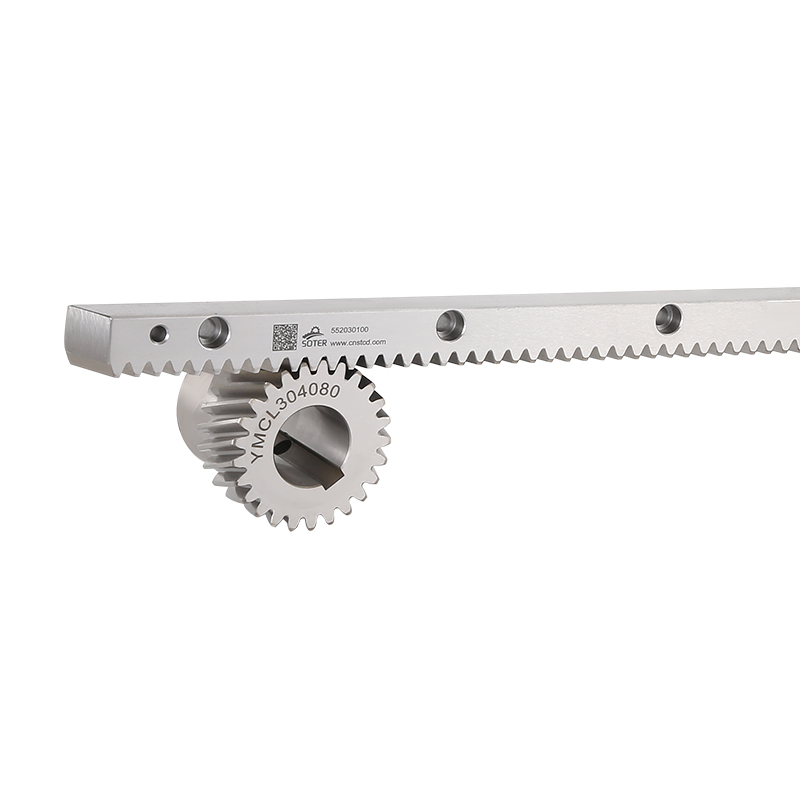
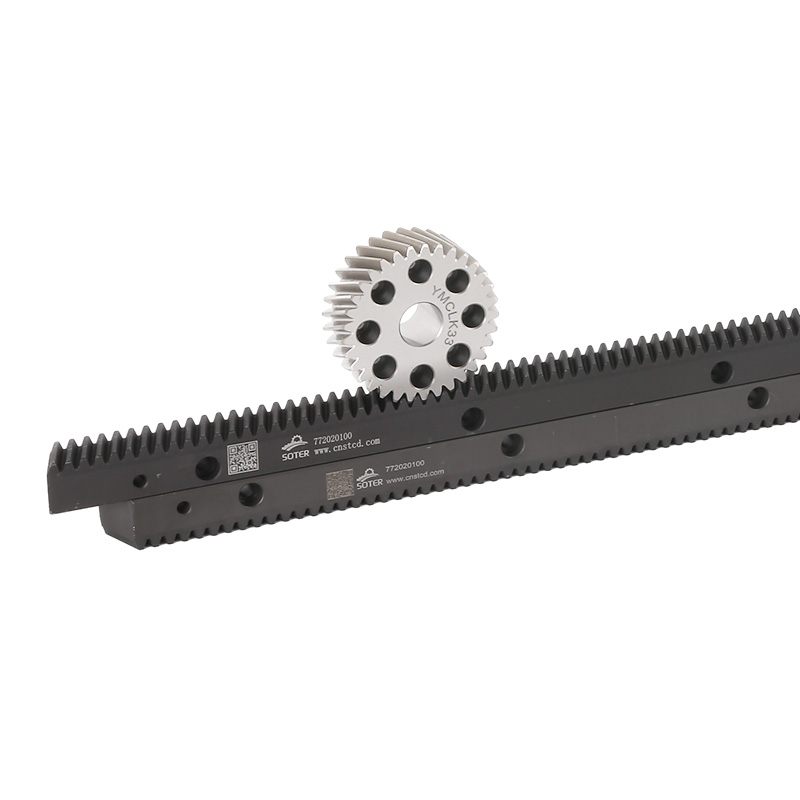
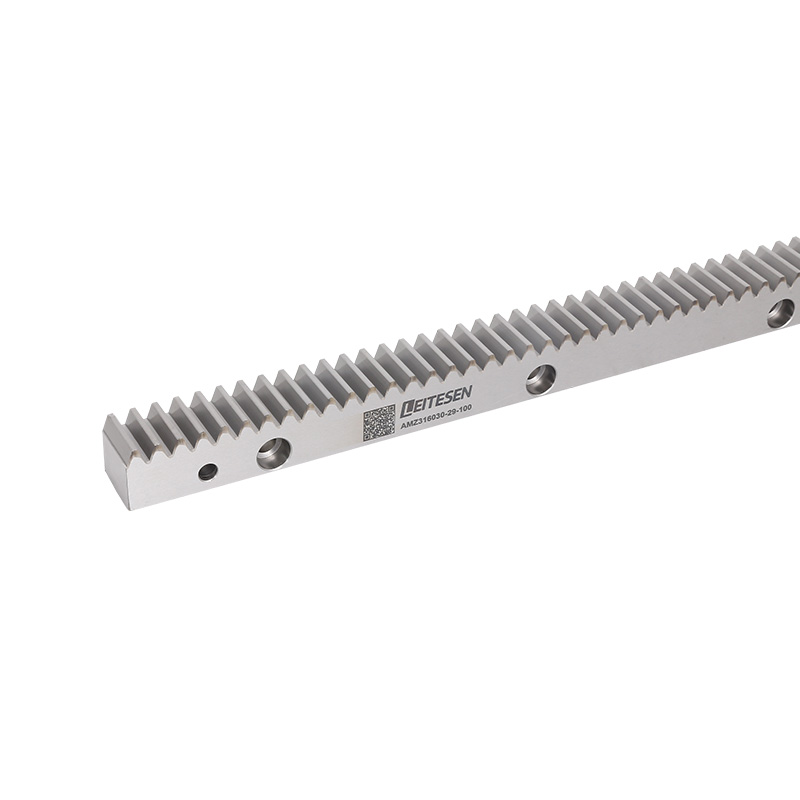
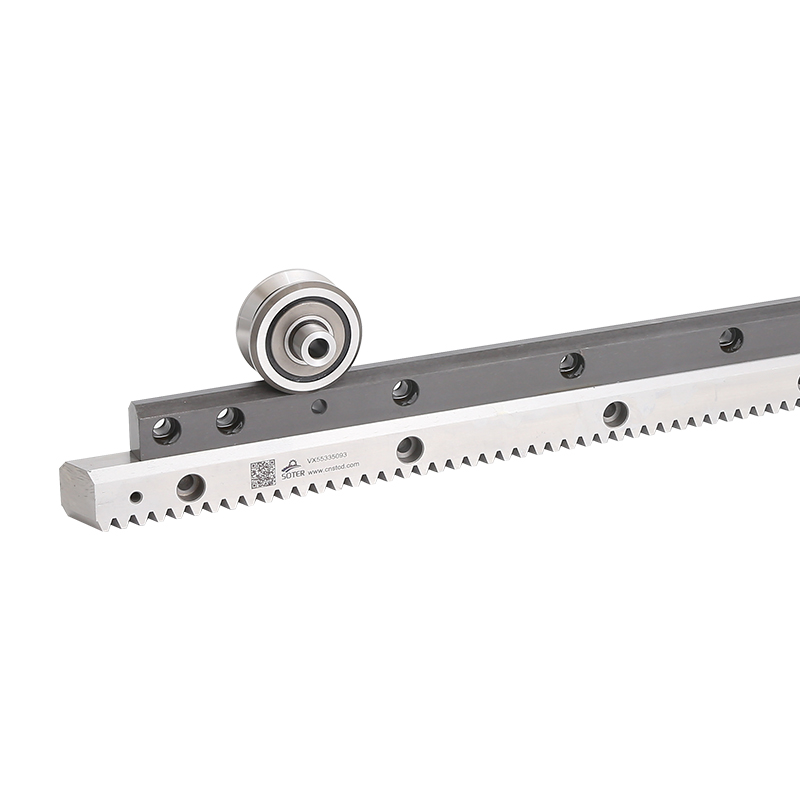
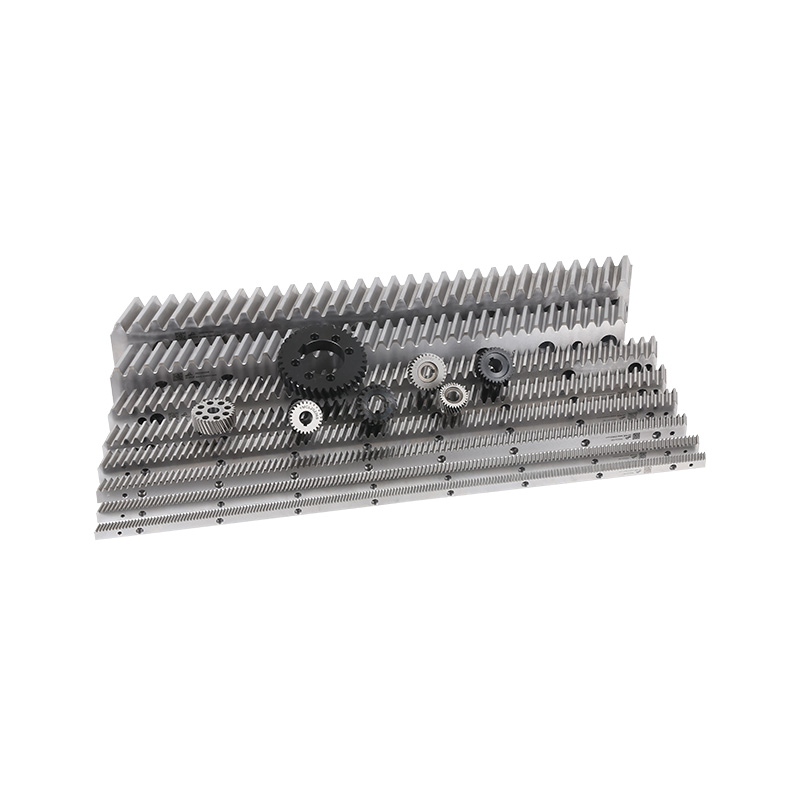
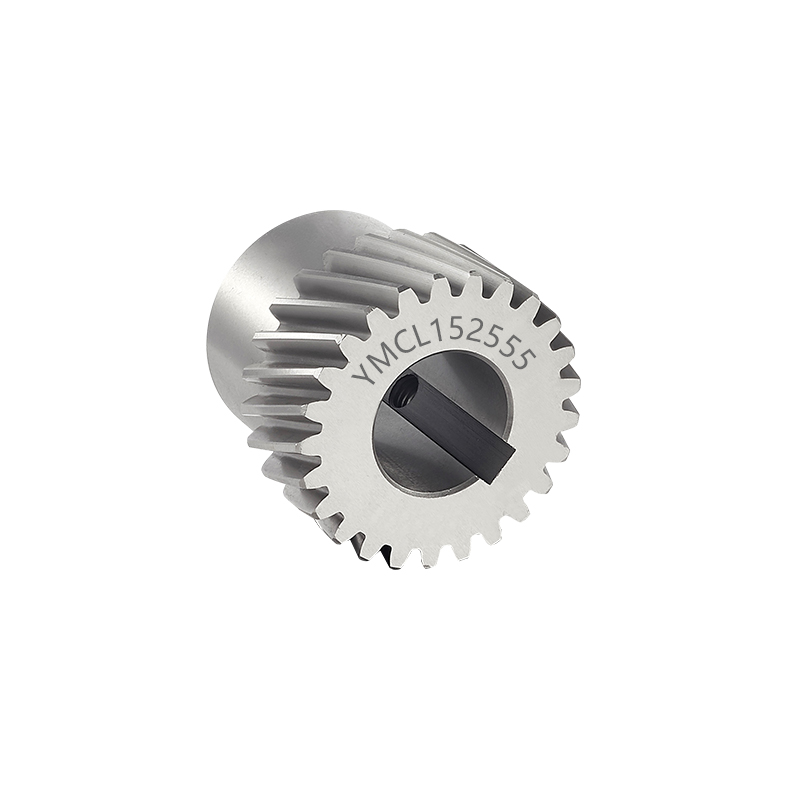
Spur Gear Rack Factory products are widely used in industrial automation, CNC machinery, robotics, and material handling equipment.
One critical factor in their performance is the module or pitch of the teeth, which directly affects linear motion precision.
Understanding how gear module influences positioning accuracy, load distribution, and backlash is essential for designing high-performance linear motion systems.
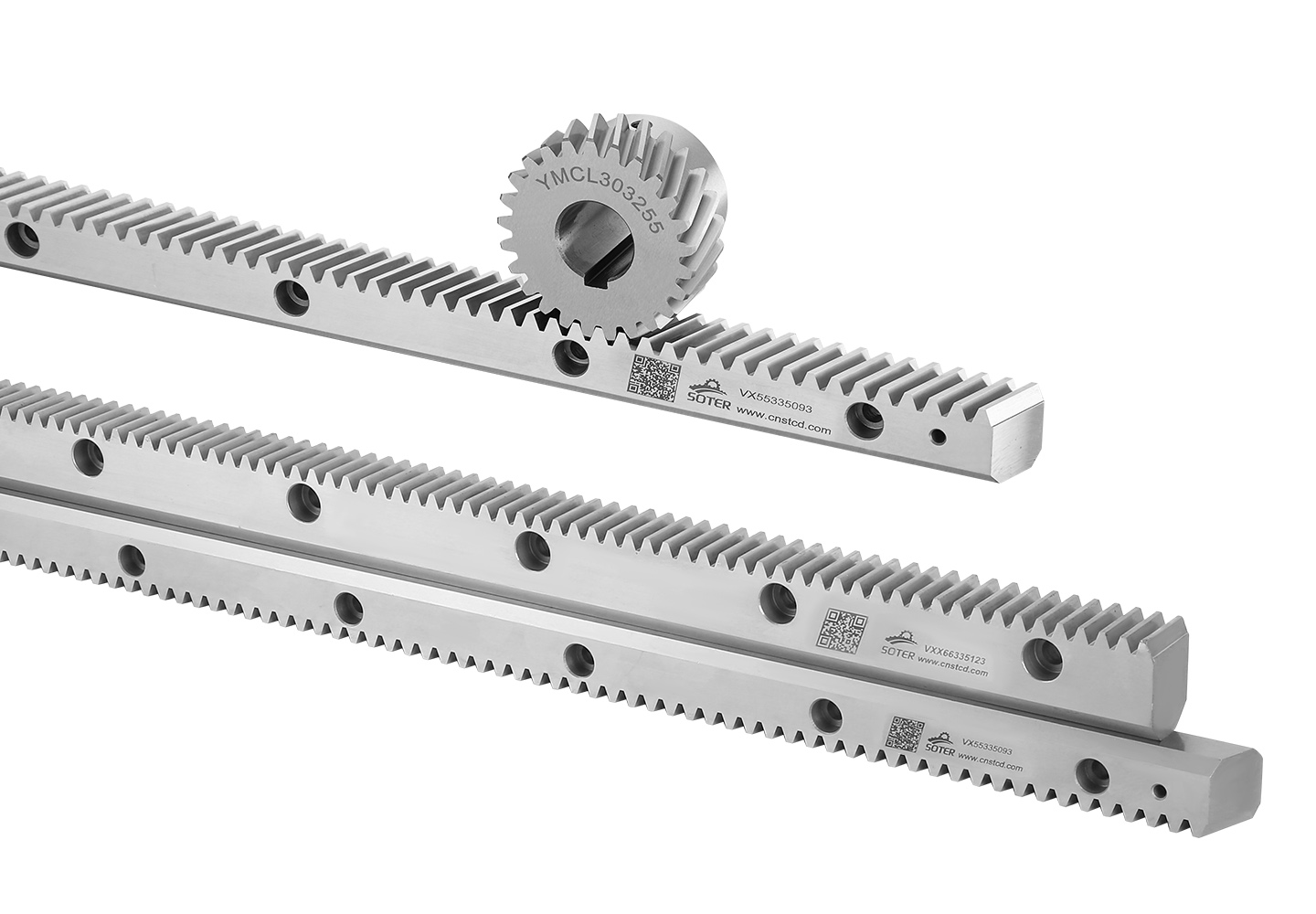
Understanding Gear Module and Pitch
- The gear module is the ratio of the pitch diameter to the number of teeth and determines the size and spacing of the teeth.
- Smaller modules mean finer teeth and closer spacing, while larger modules produce coarser teeth and greater spacing.
- The pitch of a rack affects how the pinion engages with the teeth, which in turn impacts motion smoothness, repeatability, and mechanical efficiency.
Impact on Linear Motion Accuracy
Smaller Module:
- Provides finer resolution, allowing more precise positioning of the linear system.
- Reduces linear displacement per pinion rotation, improving controllability in CNC and robotic applications.
- Reduces backlash impact because smaller teeth allow tighter engagement.
Larger Module:
- Coarser teeth transmit motion more quickly per rotation, suitable for high-speed or heavy-load applications.
- Increases the potential for positional error and backlash due to larger tooth clearance.
- Less ideal for applications requiring micrometer-level accuracy.
Load Distribution and Tooth Engagement
The module affects how load is distributed along the gear teeth:
- Smaller teeth: Concentrate load over a smaller surface area, which may require higher-strength materials to prevent wear.
- Larger teeth: Spread load across a larger contact area, improving durability under heavy loads but slightly reducing precision.
- Proper material selection and heat treatment can mitigate wear for both small and large modules, ensuring consistent linear motion over time.
Backlash Considerations
- Backlash is the clearance or play between the pinion and rack teeth.
- Smaller modules reduce the linear impact of backlash because each tooth represents a shorter distance of linear travel.
- Larger modules can increase backlash effect, which may result in positioning errors or vibration during direction changes.
- Anti-backlash designs or preloaded pinions can improve precision for coarser modules.
Manufacturing and Assembly Tolerances
- Precision machining is critical regardless of module size.
- For small modules, tighter tolerances are necessary to maintain accurate tooth spacing and alignment.
- Large modules are more forgiving in terms of machining but require careful attention to assembly alignment to reduce backlash.
- Spur gear racks from a reputable Spur Gear Rack Factory often come with quality certifications to ensure accurate tooth profiles and consistent modules.
Application-Specific Module Selection
- High-Precision Applications:
CNC machining, laser positioning, and robotic automation benefit from small-module racks for smooth, accurate linear motion.
- High-Load or Long-Travel Applications:
Material handling, industrial lifts, and heavy machinery prefer larger modules to withstand mechanical stress and improve durability.
Balancing speed, load, and precision may involve medium modules that offer acceptable resolution and sufficient strength.
Maintenance and Longevity
- Smaller modules may wear faster under heavy loads if the material is insufficiently hardened.
- Larger modules tend to be more durable but may require periodic adjustment to maintain accuracy.
- Proper lubrication and routine inspection reduce wear and preserve linear motion precision across the system’s lifespan.
The module or pitch of a Spur Gear Rack Factory product plays a critical role in linear motion precision, backlash, load distribution, and system performance.
Smaller modules offer higher resolution and better accuracy but may require stronger materials and precise assembly.
Larger modules handle heavier loads and longer travel distances, but can introduce more backlash and reduce positioning precision.
Selecting the appropriate module involves balancing load requirements, speed, desired accuracy, and application environment.
Understanding these trade-offs ensures suitable performance, durability, and efficiency in industrial linear motion systems.



 English
 中文简体
中文简体
 Español
 русский