Jun 19, 2026
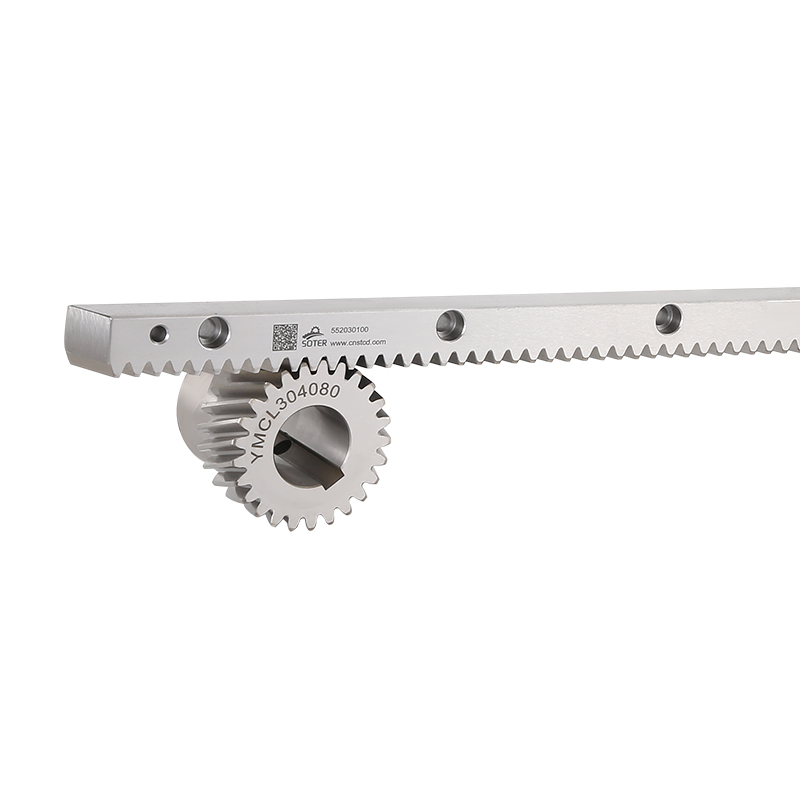
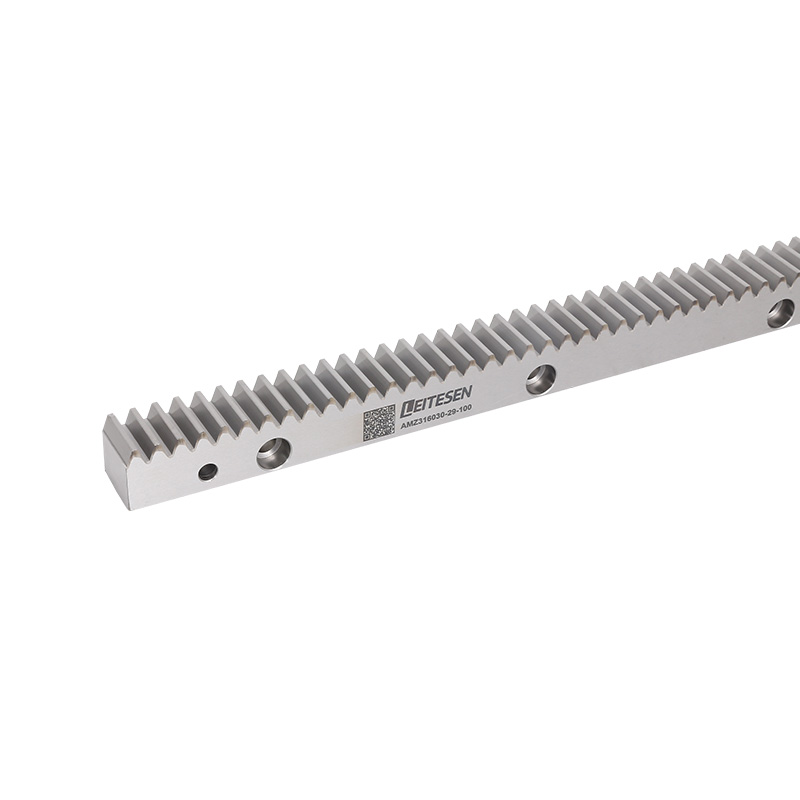
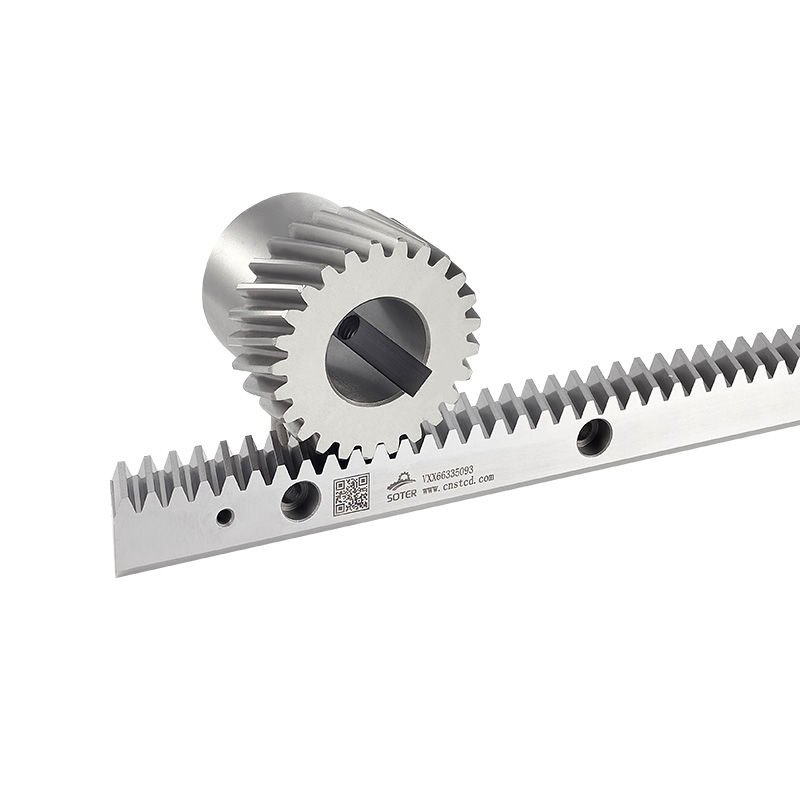
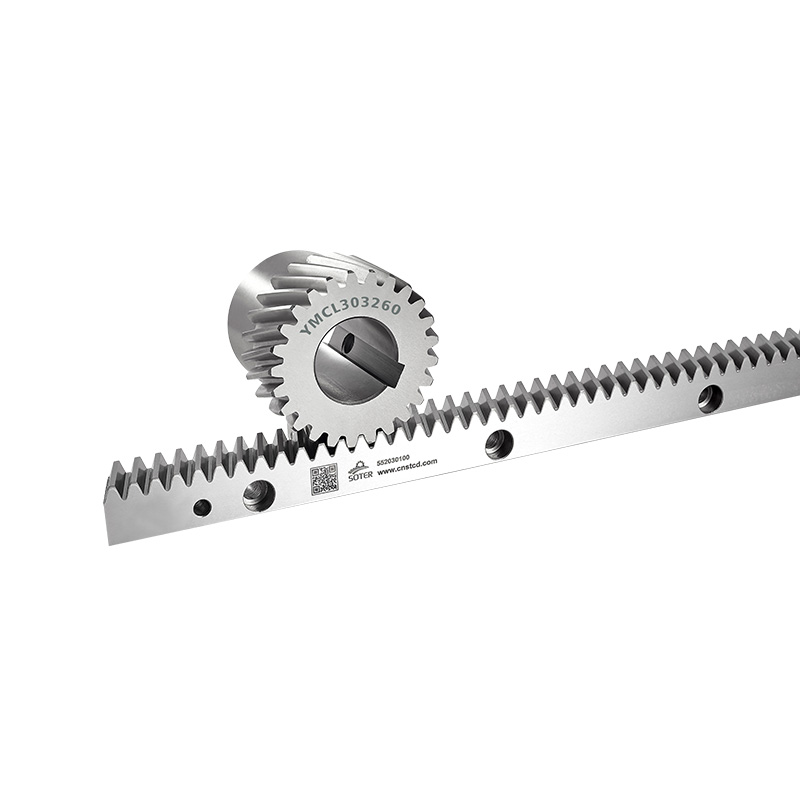
Precision rack gear often appear simple at first glance. A straight bar with teeth. A rotating pinion beside it. Motion is transferred. Linear movement is created. That's the basic idea.
But when systems start to require stable positioning, repeatable motion, and controlled response, the role of a rack gear becomes more noticeable than expected.
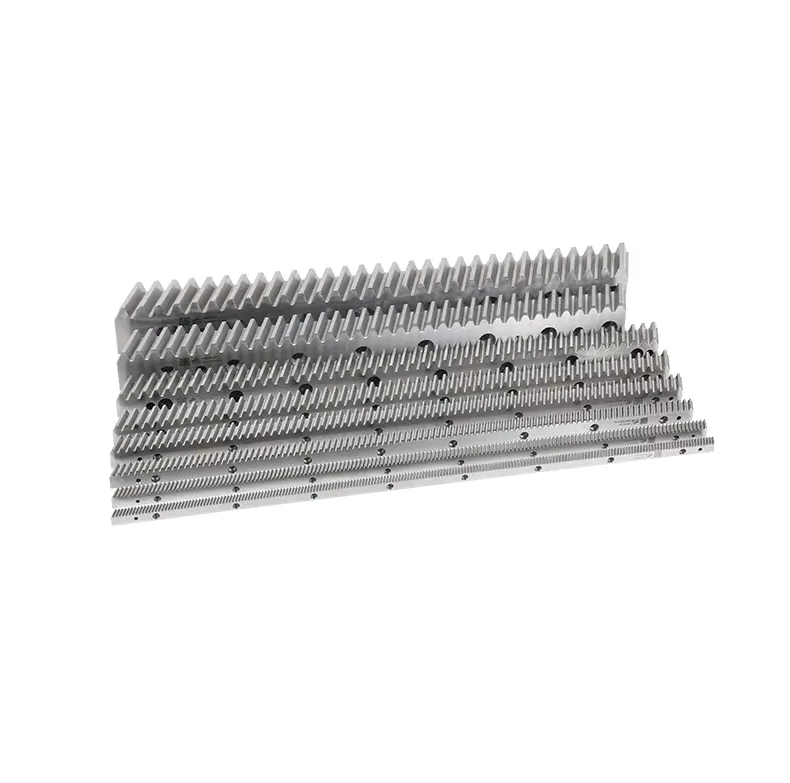
In many transmission setups, performance does not depend on a single strong component. It depends on how consistently parts interact. That's where precision rack gears quietly take a central role.
They do not "add" performance in a dramatic way. Instead, they reduce uncertainty in movement. And in mechanical design, reducing uncertainty often matters more than increasing force.
In any system where rotation becomes linear motion, there is a transition point. That transition is not just mechanical. It is also about how smooth the energy exchange feels inside the system.
A rack gear defines that transition path.
If the engagement between teeth is steady, movement feels controlled. If it is uneven, even slightly, the motion begins to carry small disturbances. These disturbances may not be visible immediately, but they affect positioning over time.
Precision rack gears are designed to keep this engagement behavior predictable. Not perfect, just predictable enough that the system does not need to constantly compensate for small variations.
That predictability is often what engineers care about most.
Accuracy in motion systems is rarely about a single measurement. It is about repetition. A machine moves once. Then again. Then thousands of times.
If each cycle behaves slightly differently, the system slowly drifts away from its intended behavior.
Rack gears sit directly in that cycle loop.
When engagement remains consistent, movement distance becomes repeatable. When it shifts even slightly, correction mechanisms inside the system have to work harder.
Over time, that extra correction effort becomes part of the system load.
So precision rack gears indirectly support accuracy by reducing how much correction is needed during operation.
They don't "fix" errors after they appear. They help prevent variation from building up in the place.
Alignment issues rarely show up as sudden failure. More often, they appear as small changes in feel or motion quality.
A system might still run. But the movement becomes less clean. Slight resistance appears at certain points. Noise may increase. Wear patterns start to look uneven.
These are usually alignment signals.
Rack gears are sensitive to positioning because their contact happens along a straight engagement line. If that line shifts, force distribution changes immediately.
Even a small deviation can push contact toward one edge. That creates uneven pressure. And uneven pressure slowly changes how the system behaves.
Once that starts, the effect is cumulative rather than immediate.
Material selection influences how rack gears behave under pressure, movement, and repeated contact. Different materials respond differently to stress, temperature changes, and wear conditions.
In precision systems, reliability is closely tied to how well the material maintains its shape over time. If the material deforms easily, the gear may lose its consistent engagement pattern.
A simple comparison can help illustrate how material choices affect performance:
| Material Consideration | Functional Impact |
|---|---|
| Hardness level | Influences wear resistance |
| Structural strength | Supports load handling |
| Surface stability | Maintains smooth engagement |
| Resistance to deformation | Preserves alignment under stress |
When selecting materials, the goal is to maintain balance between strength and flexibility. Too rigid a structure may become brittle under repeated stress. Too soft a structure may wear too quickly.
In rack gear systems, material behavior also affects noise levels and movement smoothness. A stable material helps maintain quieter operation and reduces irregular vibration patterns.
Over time, material performance becomes visible through wear patterns. Even wear distribution usually indicates stable engagement. Uneven wear may suggest alignment or load imbalance issues.
A common misunderstanding is that precision means perfection in one movement.
In real systems, that is not the priority.
What matters more is whether the same movement behaves the same way again and again.
A rack gear may perform slightly differently under different load conditions. That is normal. But if those differences remain small and predictable, the system can adapt.
Once variation becomes random, control systems lose stability.
So repeatability is more valuable than isolated precision.
Rack gears support this by maintaining consistent engagement behavior across repeated cycles, even when conditions change slightly.
Mechanical systems rarely operate under constant load. Forces shift. Direction changes. Resistance varies.
When load changes, contact behavior inside the rack gear system also changes.
If the gear design is stable, these changes are absorbed gradually. Movement continues without visible disruption.
If the system is less stable, load changes translate directly into motion irregularities.
Over time, this difference becomes more visible in wear patterns. Some areas show heavier contact marks. Others remain lighter. That imbalance reflects how force traveled through the system.
Precision rack gears aim to keep load distribution more even during these transitions. Not by eliminating load changes, but by handling them in a more controlled way.
They are used in many systems that require guided linear movement. Not always visible from outside, but essential inside.
Some examples include:
In these environments, rack gears are not the highlight. They are part of the structure that keeps motion understandable.
If they behave well, the system feels stable. If they don't, everything else becomes harder to control.
A system often works well when it is new. Parts are aligned. Surfaces are fresh. Movement feels smooth.
But mechanical behavior changes over time.
Wear begins slowly. Contact shifts slightly. Small variations accumulate.
Rack gears are part of this long-term behavior loop.
Their value is not only in initial performance, but in how slowly they change under repeated use. If changes are gradual and predictable, the system remains manageable.
If changes are irregular, maintenance becomes more frequent and performance becomes harder to stabilize.
This is why many engineers pay attention less to how a rack gear performs on day one, and more to how it behaves after repeated cycles.
Share:
Related Products

If you have cooperation intention, please leave a message for us or use the following ways to contact us.We will reply to you as soon as possible and provide you with more sincere service, thank you.
Production
QR Code
Call Us :
+86-13758631128
E-mail :
sttc@cnstcd.com
Add :
31 piazza road, ruoheng town, wenling city, taizhou city, zhejiang province, China.
Copyright © by Zhejiang Soter Transmission Technology Co., Ltd. Rights Reserved.

China Rack And Pinion For Sale

 English
 中文简体
中文简体
 Español
 русский