May 29, 2026
Precision rack gears are widely used in motion systems that require controlled linear movement. They convert rotation into straight-line travel in a stable and repeatable way. This basic function appears simple, yet the design variations behind it are far from uniform.
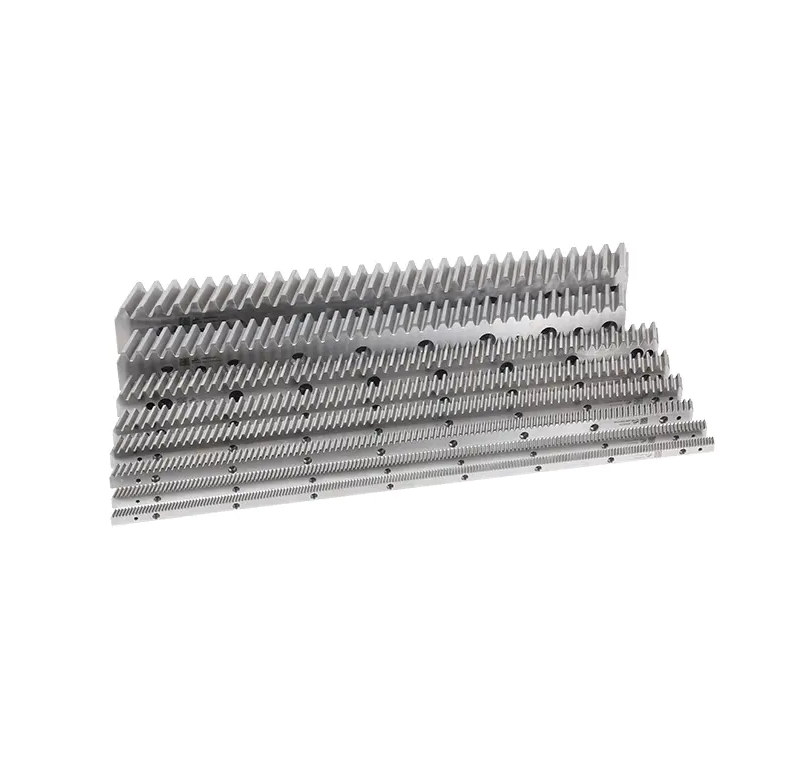
Different environments place different demands on movement. Some systems prioritize smooth travel. Others focus on load handling or spatial constraints. Because of this, rack gears have developed into several distinct types, each shaped by practical use rather than theory alone.
Understanding these types helps explain why the same mechanical idea can appear in many different forms across industries.
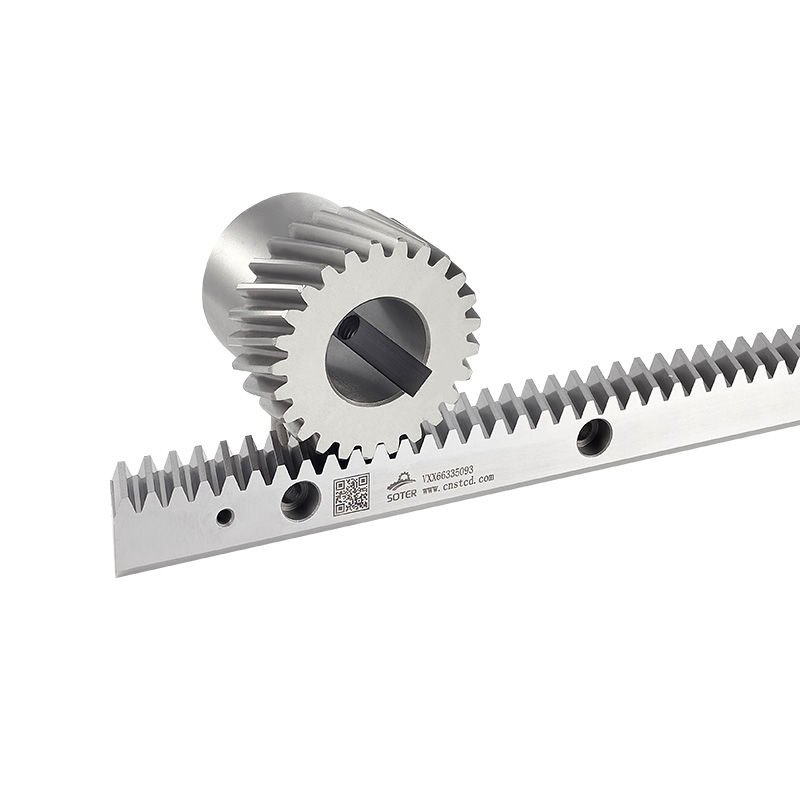
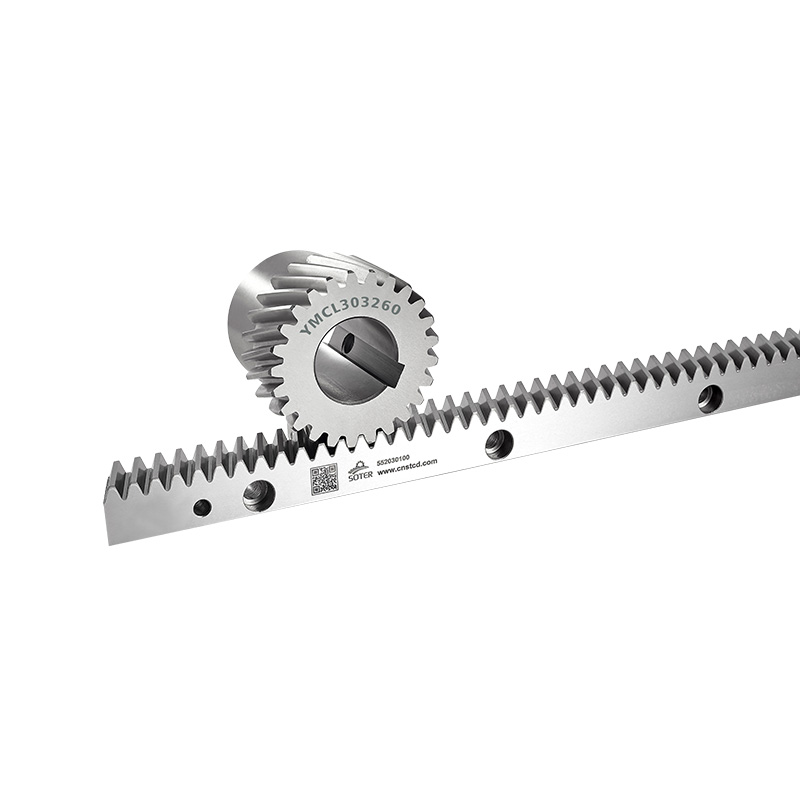
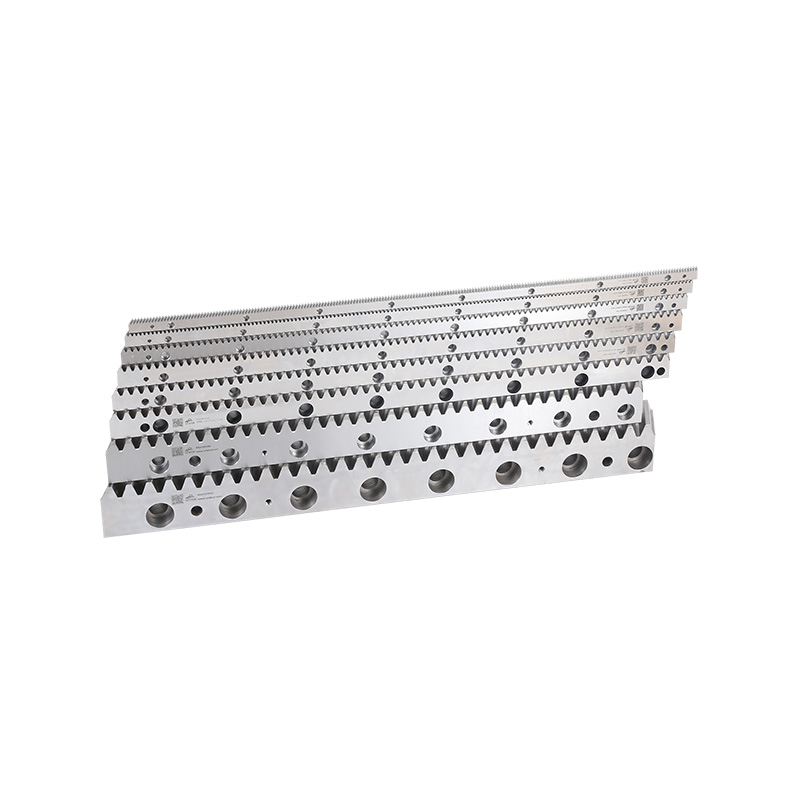
The straight rack gear is the familiar form. It features teeth arranged in a direct line along a flat surface. A matching gear engages with these teeth to create linear motion.
At glance, it looks simple. In practice, it is used in many systems where movement needs to stay predictable and consistent.
Typical characteristics include:
Straight racks are often chosen when the mechanical path is clear and does not require curves or special adjustments. They are also easier to inspect during use because the structure is fully visible.
In many setups, this type becomes the baseline solution before more complex designs are considered.
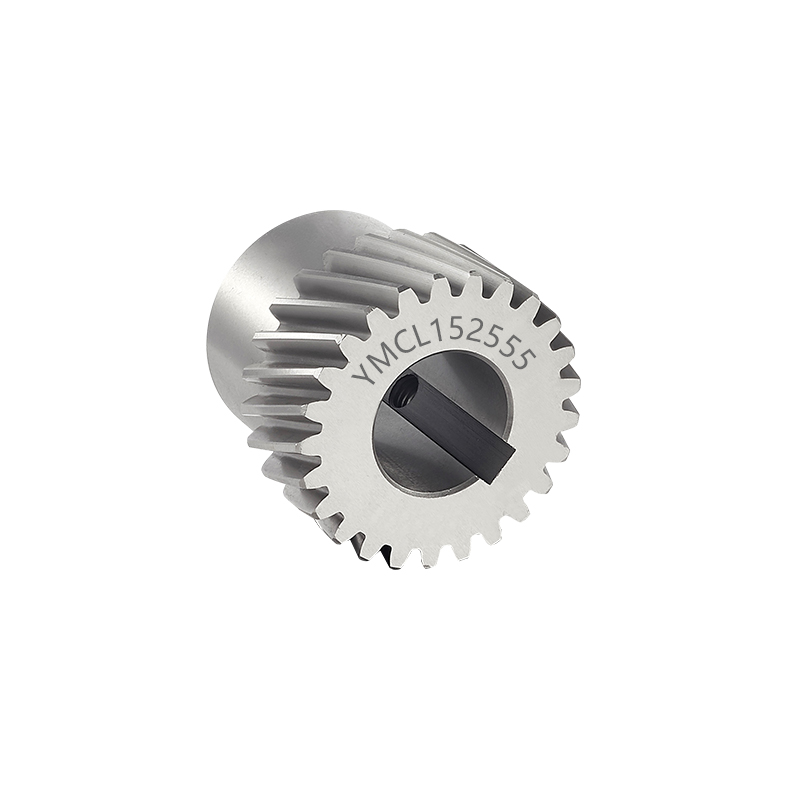
Helical rack gears introduce a different approach. Instead of straight-cut teeth, the teeth follow a slight angle along the rack. This small change in geometry has a noticeable effect during movement.
The contact between gear and rack does not happen all at once. It gradually builds as the gear rotates. This creates a smoother transition between tooth engagement points.
Common traits include:
In real applications, this type is often selected when movement quality matters more than simplicity. The motion feels less abrupt. The system runs in a more continuous rhythm.
Helical racks also tend to distribute force across a wider contact area. This changes how wear appears over time and can influence maintenance planning.
Curved and circular rack gears operate on a unique motion principle. Rather than moving along a straight axis, the rack itself is shaped into a curve or full circle, with the mating gear rolling along this curved profile to generate smooth, regulated arcing motion.
While these gear setups are not widely used in standard mechanical setups, they deliver clear advantages for machinery built around tight or non‑standard spatial layouts.
Core traits of curved rack gear systems:
Round rack solutions are typically implemented when straight‑line installation space is unavailable. Instead of rearranging components to fit a linear movement path, the mechanical motion conforms directly to the overall equipment design.
This makes them ideal for compact machinery and devices where movement must adjust to the existing structure, rather than forcing the structure to accommodate movement.
Flexible rack gears are engineered to adapt to non‑standard mounting conditions. Unlike stiff, solid racks, they can gently flex along their length, allowing them to be fitted into uneven or non‑linear spaces.
Their overall performance relies heavily on mounting support; once secured, they conform naturally to the shape of the surface or frame they attach to.
Key properties of flexible rack gears:
In real‑world applications, flexible racks are selected when design flexibility takes priority over rigid geometric precision. They remove the need to alter surrounding components simply to create a straight movement path.
This adaptive quality makes them highly functional for small‑scale assemblies and one‑of‑a‑kind mechanical builds.
Double rack systems use two racks working in relation to each other. They may run in parallel or in opposing directions depending on the design requirement.
The main idea behind this structure is balance. By distributing movement across two racks, the system can reduce uneven force and improve stability.
Key features include:
In many cases, double rack systems are used where precision must remain stable over long operation periods. The dual structure helps reduce uneven wear patterns that can appear in single-rack setups.
Rack gears can also be classified by how they are positioned within a system.
External rack designs place the toothed bar in an open position. The gear engages from the outside. This makes the system easier to access and adjust.
Internal rack designs place the teeth inside a curved or enclosed structure. The gear operates within this space.
Comparison points include:
The choice often depends on how much space is available and how the system is expected to be serviced over time.
Material choice affects more than strength. It also influences motion feel, wear pattern, and long-term stability.
Different material groups tend to behave in distinct ways:
Rigid metal structures
Provide stable motion and strong load resistance. Suitable for consistent mechanical environments.
Balanced alloy structures
Offer a middle ground between strength and adaptability.
Lightweight engineered materials
Reduce system weight and allow faster response in some setups.
Material selection often reflects the environment where the rack will operate. High-load systems prioritize stability. Light-duty systems may focus on smoother motion or reduced inertia.
Tooth design plays a direct role in how motion is transmitted. Even small adjustments in tooth shape can change engagement behavior.
Common variations include:
The tooth profile affects how quietly the system runs, how evenly force is distributed, and how wear develops over time.
In precision systems, these small differences often matter as much as the overall rack type.
| Type | Motion Style | Structural Behavior | Typical Use Pattern |
|---|---|---|---|
| Straight rack | Linear movement | Direct engagement | Standard positioning systems |
| Helical rack | Smooth transition motion | Angled contact | Controlled motion systems |
| Round rack | Curved movement path | Arc-based interaction | Compact mechanical layouts |
| Flexible rack | Adaptive path following | Bendable structure | Custom installation spaces |
| Double rack | Balanced dual movement | Load distribution | Stability-focused systems |
| Internal rack | Enclosed motion | Space-saving design | Compact machinery setups |
Each type represents a different response to real-world mechanical needs. The variation is less about complexity and more about adaptation.
Precision rack gears are used wherever controlled movement is required. Their different types allow engineers to match motion behavior with physical constraints.
Straight racks remain common in simple linear systems. Helical designs appear in setups where smoother movement is preferred. Flexible and round designs solve space-related challenges. Double and internal configurations support balance and compactness.
Across these variations, the underlying idea stays the same. Motion needs to be predictable. The way that motion is achieved depends on the environment, not a fixed rule.
As mechanical systems become more varied in layout and function, rack gear design continues to adjust quietly in the background, shaping movement in ways that often go unnoticed but remain essential.
Share:
Related Products

If you have cooperation intention, please leave a message for us or use the following ways to contact us.We will reply to you as soon as possible and provide you with more sincere service, thank you.
Production
QR Code
Call Us :
+86-13758631128
E-mail :
sttc@cnstcd.com
Add :
31 piazza road, ruoheng town, wenling city, taizhou city, zhejiang province, China.
Copyright © by Zhejiang Soter Transmission Technology Co., Ltd. Rights Reserved.

China Rack And Pinion For Sale

 English
 中文简体
中文简体
 Español
 русский