Dec 19, 2025
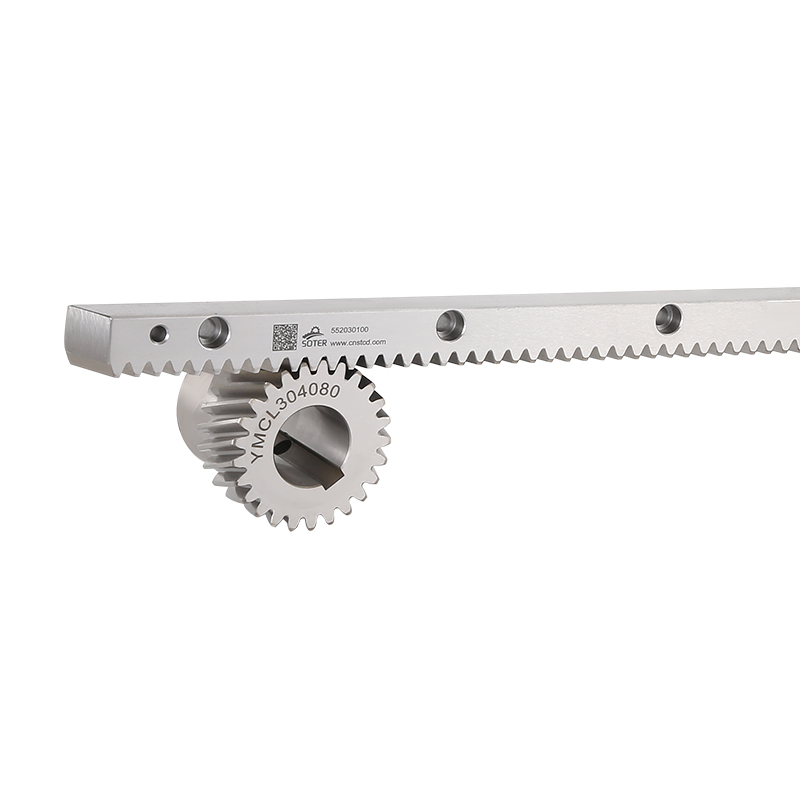
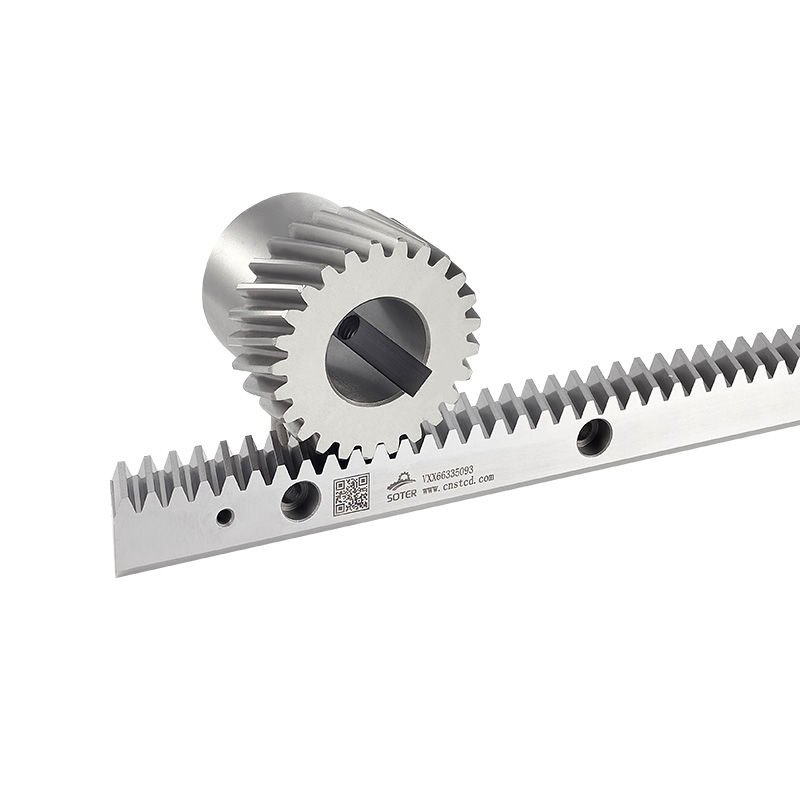
When evaluating how a Spur Gear Rack achieves higher strength and toughness, heat treatment becomes one of the decisive engineering processes. Heat treatment is used to refine the steel’s internal grain structure, modify hardness levels, and improve resistance to fatigue and wear. By carefully controlling heating and cooling cycles, manufacturers can transform the mechanical behavior of the rack teeth while keeping dimensional accuracy intact. This approach allows the rack to perform reliably under fluctuating stresses, high-speed motion, and repetitive loading conditions. Because the tooth profile directly influences power transmission efficiency, heat treatment ensures that the rack maintains its geometric stability even as operational demands increase.
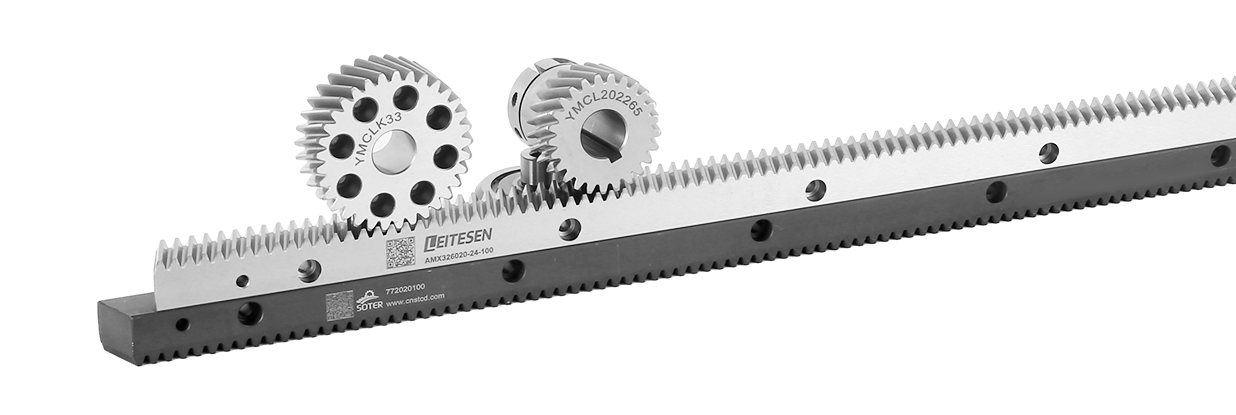
Carburizing is among the widely applied heat-treatment methods for gear racks that require a hard outer layer and a tough core. During the carburizing process, the rack is exposed to a carbon-rich atmosphere at elevated temperatures, allowing carbon atoms to diffuse into the surface. After quenching, the tooth surface becomes extremely hard, which reduces micro-pitting, scuffing, and sliding wear. The core, however, remains comparatively softer and more ductile, enabling the rack to absorb shocks without cracking. This combination is especially important in applications where the rack encounters high tangential loads or continuous meshing cycles. The dual-layer benefit makes carburizing a preferred method when balancing wear resistance with flexibility.
Induction hardening offers a more targeted way to enhance tooth strength by selectively heating only the working surfaces of the rack. This localized treatment produces a hardened case without altering the properties of the entire component, which helps preserve overall dimensional stability. After induction heating, rapid quenching transforms the surface into a high-hardness martensitic structure. This process is particularly advantageous for racks used in medium- to heavy-duty machinery, where tooth tips and flanks must resist repetitive stress while the body of the rack remains flexible enough to endure bending loads. Its controllability, energy efficiency, and minimal distortion make induction hardening an attractive option for precision-driven applications.
Before high-intensity surface treatments are applied, normalizing and annealing are often used to prepare the material. These processes relieve internal stresses, refine grain size, and restore uniformity across the rack’s cross-section. Normalizing enhances mechanical balance by producing a consistent microstructure, which reduces the risk of warping or unexpected deformation during later hardening stages. Annealing further softens the steel, improving machinability during tooth cutting. Without these preparatory treatments, subsequent hardening processes may cause dimensional instability or excessive brittleness, especially in racks subjected to tight tolerance requirements. Thus, normalizing and annealing serve as foundational steps that enable more advanced thermal modifications.
Tempering is essential after any quenching-based hardening method because it restores toughness that would otherwise be lost when steel reaches hardness. During tempering, the rack is reheated to a controlled temperature below its critical point, reducing internal stresses and improving resistance to cracking. This step is crucial for racks that experience cyclic loading or high impact forces. A properly tempered rack resists brittle failure and maintains stable mechanical behavior across a wide range of operating temperatures. Tempering also enhances fatigue life, ensuring consistent performance over prolonged periods of operation.
No single heat-treatment method is suitable for every use case. Instead, rack manufacturers design customized thermal sequences to achieve the ideal blend of strength, hardness, and toughness for their applications. By combining preparatory treatments with surface hardening and controlled tempering, engineers ensure that the rack teeth withstand friction, pressure, and shock without suffering structural deterioration. For industries requiring high precision and long service life, heat treatment is indispensable in elevating the rack’s performance, stability, and reliability.
Share:

If you have cooperation intention, please leave a message for us or use the following ways to contact us.We will reply to you as soon as possible and provide you with more sincere service, thank you.
Production
QR Code
Call Us :
+86-13758631128
E-mail :
sttc@cnstcd.com
Add :
31 piazza road, ruoheng town, wenling city, taizhou city, zhejiang province, China.
Copyright © by Zhejiang Soter Transmission Technology Co., Ltd. Rights Reserved.

China Rack And Pinion For Sale

 English
 中文简体
中文简体
 Español
 русский